
Fighting fascism — Day Eight – LGBTQ+ me

Fighting fascism – Day Eight

Today, I would like to talk about the administration’s efforts to tag specific groups of Americans as the enemy. I will further discuss the administration’s ongoing war on immigrants, asylum seekers and refuges in this Thursday’s blog. Today, I focus on the attacks on the LGBTQ+ community generally and transgender and nonbinry people in particular.

I need to start, however, with a full disclosure. One of my children is trans and the other is queer. One, born male, now uses female pronouns. The other born female uses “they” pronouns. We are very proud of our children and are completely supportive of their transitions and their lifestyles. They are successful, creative, generous and fully engaged people and we love them quite a lot.

We are also worried out of our minds about what is going to happen to them as we slip towards a fascist state.

The administration’s decision to remove transgender people from the military is essentially a case of designating certain people — because of their identity – not eligible to serve their country. Not because of what transgender persons may have done or even of what they think, but because of who they are. This is one step away from dehumanizing them completely. Next, they may be denied certain support, services and rights that are the entitlement of every American (Medicare? Medicaid? Social Security? Presumption of innocence?). They already have difficulty getting passports and visas based on their gender identity.

The administration has zeroed in on transgender people because they are few in number and thus they are a “test case” for the future designation of specific groups of people as unhuman (a favorite term these days of fascists, it seems). Going after transgender people is bad enough but if successful the administration opens the door to treating other groups in the same way. Down the line, we may expect McCarthy type campaigns against those fighting fascism! But that will come much later. In the meantime, there will be incremental steps – other members of the LGBTQ+ community, persons of color.

Many of you have seen this before. I think that it is particularly relevant to our times. I copied it from an article written by Jamil Salmi (definitely worth a read in its own right, by the way: a passionate discussion on the decline of academic freedom in higher education).

“ This is why I am always humbled when I think of Martin Niemöller, the German priest who, after initially embracing the racist ideology of the Nazi party when Hitler came to power in 1933, realised his errors and became the leader of a group of German clergymen opposed to the Nazis.

He was arrested in 1937 and spent eight years in the Sachsenhausen and Dachau concentration camps. After the war, he wrote the following poem to express his belated regrets (as reported by the British Holocaust Memorial Day Trust):

First, they came for the Communists,
And I did not speak out
Because I was not a Communist

Then they came for the Socialists,
And I did not speak out
Because I was not a Socialist

Then they came for the trade unionists,
And I did not speak out
Because I was not a trade unionist

Then they came for the Jews,
And I did not speak out
Because I was not a Jew

Then they came for me,
And there was no one left
To speak out for me.”

Here are some organizations that work very actively to defend the rights of transgender and nonbinary individuals, as well as other members of the LGBTQ+ community.

  Advocates for Trans Equality: Formerly known as the National Center for Transgender Equality, this organization focuses on policy advocacy and public education to advance transgender equality. Their website is here and they have an ACTION button.

  Transgender Law Center: As the largest national trans-led organization, it advocates for self-determination and justice for all people. Their website is here. Although they don’t have an ACTION button, they definitely do a lot to defend transgender rights and individuals.

  GLAAD: This organization works to promote positive representation of transgender people in media and culture. Their website is here.

  The Trevor Project: Offers crisis intervention and suicide prevention services to LGBTQ youth, including transgender youth. Their website is here. They have a government and advocacy page: they lead the fight against conversion therapy.

  Human Rights Campaign (HRC): Works to educate the public about the transgender community and provides resources for transgender and non-binary people to live their fullest lives. There website is here and they have a take . They have a petition dedicated to the issue of banning transgender persons from military service.

The ACLU has a petition on protecting trans freedoms.

You might want to consider buying girl scout cookies from a trans girl scout! It would count as an anti-fascist act, in my book. Check out this post by Erin in the Morning.
Fighting fascism – Day Six – the conversation

There have been a lot of great ideas and discussions sent our way on the current state of the fight against fascism and the role that this blog could play. I draw attention to a few below.

On the subject of truth, one friend has suggested that I change the name of my blog site because “Trueish stories” may not convey the right tone, considering that we want people to strengthen their notion of the truth. I’m of two minds because this has been the name of my underused blogsite for many years. Also, others have said that they really like it. But, if you find it misleading or inappropriate, I’m more than willing to consider changing it (if I can figure out how).  Please let me know what you think.

A friend suggested that we should focus on fewer organizations. I admit that I have been taking a scattershot approach. My motivating idea at this point is that we try to draw people into committing a zillion acts of micro-resistance – one act at a time – because that could ease them from being depressed and isolated (and ineffective) into being engaged. My friend is worried that we are running out of time. I’m all for supporting a movement. I just don’t know which one. Your thoughts?

Along the same lines, another friend made a passionate plea that we need our own 2025 pact (my paraphrase) considering how organized the fascists were coming into power. He decries how badly a job “progressives” (and definitely the Democratic party) have done at capturing the curiosity and imagination of people, particularly compared to the fascists (or the Republican party). I completely agree, but how do we actionably get there?

Many of you work or have worked in the same business as I have – development aid. We have committed ourselves to bettering the lives of people living in poorer countries. The administration has frozen development aid and appears intent on ending it, as is clearly described in this NPR report. I haven’t seen any petitions or letters being written about fighting this trend. Has anyone? This is something that a lot of us could get behind.

A few suggestions from friends.

Leaders We Deserve “is a grassroots organization dedicated to electing young progressives to Congress and State Legislatures across the country to help defeat the far-right agenda and advance a progressive vision for the future.”

Protect Democracy “is a cross-ideological nonprofit group dedicated to defeating the authoritarian threat, building more resilient democratic institutions, and protecting our freedom and liberal democracy. Our experts and advocates use litigation, legislative and communications strategies, technology, research, and analysis to stand up for free and fair elections, the rule of law, fact-based debate, and a better democracy for future generations.” The following link takes to a list of 27 actions you can take.

David Wheeler, conceived of, programmed, and launched an automated, AI-supported, daily synthesis of hundreds of daily newspapers, organized by thematic area – called NewsWatch [newswatch21.org]. I love this site!

Fighting Fascism – Day Five – talk to people

One friend had a very interesting suggestion: stop people in the street and talk to them! I am a bit ambivalent about that strategy – social norms and all (not polite to talk about politics or religion with strangers). However, that said, it is true that most of the suggestions I’ve shared to date are lonely ones – signing petitions, calling the offices of representatives, and writing letters. Women in Black is more of a social experience, which is one of the reasons I included it.

I would probably prefer striking up a chat with someone sitting next to me on a bus or at the next table in a café than stopping someone in the street. In our paranoid and angry time, these might be safer contexts.

It doesn’t have to be complete strangers. You can talk about your concerns regarding the rise of fascism in your book club, after services, or during a neighborhood gathering. But, what to say when you want to strike up a conversation about fascism? Using the word “fascism” as a opener probbably isn’t always a good idea. I did a little research and questions like: “What are your thoughts on the direction the neighborhood/city/country is moving in?” might work. “Do you think that the administration is making the right decisions presently?” could be another chat starter. “How did you come to that conclusion?” might be a way to deepen the conversation. At issue isn’t even whether you agree with the other person. It is to have an exchange with another human being. If it gets unpleasant, one can always politely stop the discussion. If you have suggestions about how to talk to strangers about regime change, please share them!

There seems to be a lot of organizations out there that are interested in dialogue and creating opportunities for exchanges across political borders. I found the Listen First Project as one example, although it appears that a lot of big companies are financing it (Facebook, Target, MacDonalds, etc.), so I’m not sure that they are truly non-partisan. If you have any information on this group, let me know. But, they do have links to a lot of organizations and seem to have some good tips. If you are aware of others that are creating fora for dialogue and ideas about how to go about talking to people face-to-face again, please share.

In terms of an action that you might want to take today, I would recommend that you voice your concerns about the nomination of Robert Kennedy Jr. The Senate Finance Committee will meet on Jan. 29 to discuss the confirmation of RFK Jr., whose stances on vaccines and abortion have raised questions from Democrats and Republicans alike. So, time is of the essence. A good friend suggested this link. 5calls.org has a link providing info on how to call your senator to protest this abominable nomination.

As is probably obvious, I’m a bit of a novice when it comes to all of this. If you would rather than I include you in the bcc: list rather than the to: list, please let me know. I understand that I might have made a faux pas here. Apologies.

Fighting fascism — Day Four – sharing ideas

Phew! They are certainly compounding assault upon assault on democracy. Overturning many of the good works of the previous administration on climate, health care, and the rule of law. The more I read, the more swamped I feel. Some claim that the administration will eventually shoot itself in the foot. I’m concerned that statements like that render us passive and that a lot of damage can be done in the meantime. What do you think?

I got many ideas from you and I want to share a couple in today’s blog. There is no overarching theme. Just sharing. Send me more ideas!!

The first is an initiative called “Women in Black”, in which a friend in Baltimore participates.  Here are a couple of quotes from their website that explain it better than I could.

Women in Black is a world-wide network of women committed to peace with justice and actively opposed to injustice, war, militarism and other forms of violence. … We are not an organisation, but a means of communicating and a formula for action… Any group of women anywhere in the world at any time may organize a Women in Black vigil against any manifestation of violence, militarism or war… Our actions often take the form of women wearing black, standing in a public place in silent, non-violent vigils at regular times and intervals, carrying placards and handing out leaflets…. A vigil, as Women in Black use the term, generally means a nonviolent demonstration of one or more people in which we hold signs in a public location to express our political views. It’s not a march, but Women in Black around the world have sometimes also held marches. A vigil can be one woman (yes!) or a small group or even a large group.

I urge you to look at their site and see if they organize events in your city. If not, you might consider holding an event of your own. They are set up to provide guidance.

Another friend reminded me that if you are an American citizen who lives outside the US, you should consider becoming a member of Democratic Abroad. They focus a lot on getting out the vote, informing Americans living abroad how to vote (not always a straightforward process). They also urge members to write to reps on specific issues. I belong to the Marseille/Aix-en-Provence chapter and have enjoyed it.

It seems that one of my links for the ACLU (Stop Project 2025) didn’t work for some reason. Here it is again, hopefully working this time. Considering yesterday’s blog, I also want to draw your attention to a couple of other of ACLU’s initiatives that are timely: one on birthright citizenship and the other is on preventing mass deportations. I should have waited until next Thursday, but I just couldn’t!

Fighting fascism – Day Three – protecting immigrants, refugees and asylum seekers

Fighting fascism – Day three

The Right Rev. Mariann Edgar Budde, the Episcopal bishop of Washington, pleaded the following: “In the name of our God, I ask you to have mercy upon the people in our country who are scared now … They may not be citizens or have the proper documentation, but the vast majority of immigrants are not criminals. They pay taxes and are good neighbors. They are faithful members of our churches and mosques, synagogues.”

I want to draw attention today to groups and actors that are organizing to counter the assault on immigrants, refugees and asylum seekers in our country. Going after foreigners is a tried-and-true fascist tactic. Protecting our immigrant community (both documented and undocumented) from violence and unfair treatment (including deportation on the thinnest of pretexts) is key in the fight against fascism.

The Raices Texas Organization has done some wonderful work in the Lone Star state and nationwide defending immigrants, asylum seekers and refugees. They have existed since 1986 and have a national reputation. They will be very busy in the years to come. They have a TAKE ACTION button. I particularly liked this letter to Congressional representatives. I also like their “motto”: Let’s fight for families. Let’s be the welcoming nation that we’ve always aspired to be.

The U.S. Committee for Refugees and Immigrants is probably the most prestigious and well-known organization in this area. They have published a very strong statement reacting to the recent executive order targeting refugees. They have a particularly interesting initiative where they match refugees with potential employers (such as you, perhaps!). I like the quote they have from Malala Yousafzai; When the world is silent, even one voice becomes powerful. They have just issued a Policy & Advocacy Report that is particularly informative and damning in reaction to the new administration’s actions against immigrants, asylum seekers and refugees.

As the son of a refugee, I am particularly sensitive to this cause – my father and his family suffered terribly because of Nazism and had been greeted with open arms when he came to America in the 1950s.

If you know of any organizations and causes that you think I should shout out on this issue, please let me know.

Finally, a good friend reminded me that NPR remains a very good and honest source of news and a fine example of freedom of speech in our country: it deserves our support. 

All the best,

Michel

Fighting fascism – Day Two – freedom of the press

Thanks for checking out my blog. Here’s my ongoing attempt to keep fighting fascism!

The fascists are moving very fast: erasing birthright, pardons for insurrectionists, militarizing the border, pulling the U.S. out of the WHO and the Paris Climate Agreement, gutting diversity, equity and inclusion programs and overturning protections for transgender Americans are among the more egregious acts. Many more have happened and are on the way.

There will be a lot to do to fight back. And it will be a long haul. In my opinion, anti-fascist organizations are probably not moving fast enough –the ones I listed yesterday haven’t updated their “TAKE ACTION” pages in response to the inaugural speech yet. However, many of the actions they propose stay relevant. I just looked at the ACLU action page and there are at least a half-dozen petitions that can be signed. There’s one on Common Cause’s website that I believe merits attention regarding Project 2025.

In any case, what is important is to stay informed and to inform others. We need to keep on top of what is happening. There is a lot of news being reported and analyzed out there and it is easy to be overwhelmed. I do not claim to be a master of that universe, but I would like to draw your attention to one site that I think has particularly interesting coverage. The Contrarian is run by two former Washington Post reporters, who quit for reasons we certainly understand. I find they have interesting articles and discussions that are worth visiting.

Aside from Media Matters, which I listed yesterday, here are a few other organizations that are fighting for freedom of the press and against disinformation.

  1. Electronic Frontier Foundation (EFF) – Focuses on defending digital privacy, free expression, and internet freedoms. (www.eff.org)
  2. Political Research Associates (PRA) – Conducts research on authoritarian and far-right movements to counter their influence. (www.politicalresearch.org)
  3. Institute for Research & Education on Human Rights (IREHR) – Tracks far-right extremist groups and promotes strategies to fight them. (www.irehr.org)

I need ideas! If you have any suggestions, please share them with me so I can put them on subsequent blogs posts.

Fighting fascism every day

The slippery slope towards fascism became considerably steeper yesterday. The new American administration intends to constrain civil liberties, freedom of speech, and opposition. It will remove economic opportunities for those who are not already rich and protections for minorities. It plans to undermine the nation’s education system, health care system, social safety net, and other institutions that provide support and reassurance to the average person. It will try to reverse efforts to protect the environment. It will “deregulate” or, in other words, remove guardrails that prevent the greedy from further ravaging our land, people, and spirit. It seeks to orient the justice system to protect the interests of the few rather than everyone and to weaken the rule of law. It will more readily resort to violence. It will try to undermine our democracy. It will try to stay in power forever. This is fascism.

What should we do about this? Fighting fascism requires a combination of awareness, activism, and community engagement. Resistance to fascism is most effective when it is organized, inclusive, and consistent. I propose a simple strategy to start: conduct an act of anti-fascism every day, no matter how big or small. Write a letter to a government representative or news outlet or sign a petition or contribute to an organization that is fighting fascism or attend a meeting of a group dedicated to making something happen differently at a local, regional, national or international level or go to a demonstration or engage in a boycott or carry out an act of civil disobedience.

It will depend on your comfort zone, time, resources, interest in a particular topic, passion, and energy level. The important thing is to do something every day. It does not mean spending your whole day fIighting fascism (of course if you can, why not? But most people have to do laundry). Spending even ten minutes a day (well, maybe twenty) may be enough for you to keep the pressure on.

Communication is key. The best weapon that the fascists have is to make you feel that you live in an isolated bubble and that you are a helpless individual: that you are alone. By conducting an act of anti-fascism every day, you join others who are similarly engaged and together we make a difference. Make new friends!

I will provide suggestions of anti-fascist acts every day. You would be surprised how easy it is to find things to do. Send me ideas and I’ll post them as well. At the end of this blog, there are links to a few organizations that are currently fighting fascism and that suggest actions you can take. Sending your friends a link to this blog might be enough to fight fascism for today! Earlier, I called the office of the Governor of Maryland office to demand that he take a stand against deportation (see 5calls.org). It took me just a few minutes. Also, send me any suggestions you may have on how to improve this initiative.

I am committed to the values and principles that define our nation and am distressed by what is happening and what might happen. I cannot just experience this distress silently. That is why I am sharing this simple strategy with you. I encourage you to think about adopting it, if for no other reason than so I just don’t feel so alone!

Several organizations in the U.S. actively fight fascism, promote democracy, and oppose authoritarianism. Here are a few groups. I will list others in subsequent blogs. These organizations often provide resources, organize protests, and advocate for policies that counter authoritarian movements and defend democracy. Many also welcome volunteers and donations to support their causes. Each also regularly proposes actions that can be taken to fight fascism.


American Civil Liberties Union (ACLU) – Defends constitutional rights and fights against government overreach, discrimination, and authoritarian policies. There’s a “TAKE ACTION” button on their main web page. (www.aclu.org).

Media Matters for America – Monitors misinformation and far-right propaganda, promoting accountability in media. There’s a “TAKE ACTION” button on their main web page. (www.mediamatters.org).

Common Cause – Focuses on protecting voting rights, fighting corruption, and strengthening democracy. There’s a “TAKE ACTION” button on their main web page. (www.commoncause.org).

Five Calls – An easy-to-use site that guides you to make calls to government representatives (congresspersons, state delegates, etc.) to voice your concern and demand action on a selection of key issues. (www.5calls.org)


Translations

700-00588890

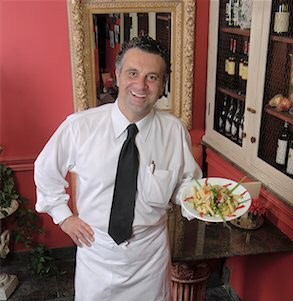
He is not the waiter in question, but close!

When I was about 18, I went to an Italian restaurant in Marseilles with some cousins and we engaged in a heated discussion as to the pros and cons of chemicals in food. We evidently disagreed about something, although I don’t remember what or whether I was for or against chemicals in food. We had also been drinking bad wine (we were young and penniless). In any case, I stopped the waiter as he swung by and asked him:  “Are there any preservatives in my pasta?”.  However, I said it in French: “Est-ce qu’il y des préservatifs dans mes pâtes?” Translated, I asked: Are there any condoms in my pasta?

The waiter looked at me for a long second and said, as no one but a French waiter could say: “Je vous assure, monsieur, il n’y a aucun préservatif dans vos pâtes”.  [Let me assure you, sir, that there are no condoms in your pasta.] I continued eating, reassured, albeit the laughing stock of my cousins to this day.

True-ishism I

I think that it was ‘93 or ‘94 and we really wanted to get to this village that was upcountry (beyond Parakou in Benin) before the end of the school day.  The dirt road we took was horrible, muddy, potholed. In Benin, we don’t try to avoid potholes, we choose them.” We were tossed and exhausted.  Several hours into the trip, we decided to ask for some reassurance.  We saw a guy walking along the road and pulled up alongside of him.

“Hello there, how are you? How is the family?  How long do you think it’s going to take us to get to XXXX (I can’t remember the name of the village)”

“It should take about two hours.”

“Oh shit!” (Well, I probably said “merde” considering that Benin is a francophone country).

“Okay, okay,” our friend answered, “one hour then.”

_________________________________________________________

It was ‘97 or ’98, and I had been staying for a few days in a village near Bembéréké, Benin.  I was interviewing teachers, the school director, parents, and pupils at the local primary school for my dissertation.  It was the only school in the area and children came from miles around.  One day, the school director received an official letter from the Ministry and he was perplexed.  He showed it to me and wanted some advice as to how to answer it.  The ministry wanted to know what the school was doing to attract more girls to attend. The letter indicated that additional money (“additional” not quite accurate since they usually don’t get much to begin with) could be made available to the school if they had increased or planned to increase the number of girls enrolled.  The director was a great person and had done a lot already to get all children in the community to come to school and to learn something.  He had one question for me:  “Should I report to the Ministry more or less than the number of girls we enroll in our school?”  We discussed this for a while.  The last answer he needed was, “you should report exactly the number of girls you currently have enrolled in the school”.  After much discussion (and beers) we decided that it would be best to under-report.

Now, for those puzzled by these exchanges, I believe that they reflect the essential conundrum of information collection in places where power relationships are lopsided (which is almost everywhere, but starker in developing countries).  Our fellow traveler in the first story (he on foot, us in a Landcruiser) simply wanted to make me happy.  He saw that I was upset by the first answer he gave me.  Rarely a good idea for a traveler of obvious wealth and probably influence to leave town pissed off.  At the very least it wouldn’t have been very courteous.  So the veracity of the information was less important than keeping our relationship on good standing.  By the way, I did explain why we were in a hurry, which led him to reassure me that we would arrive in time.  I don’t remember whether we did or not, but it probably didn’t matter.

For the school director, things are a little more complicated and require a little more context.  Although his reaction seems to reflect a certain penchant for corruption, this could not be further from the truth.  His professional dedication was exemplary.  He was always scrambling to find additional resources to keep the school running – fix a leaking roof, buy chalk, get medicine for a sick teacher, or pay the women who made lunch for the kids.  The Ministry of Education was always promising stuff (rarely money) that never arrived.  So his concern, which was based more on cynicism and pragmatism than venality, was how to get his hands on extra cash for the school.  In our discussion, we started from the following facts.  1. the Ministry could care less how many girls there were in the school.  2. if there was money given out for having a lot of girls in school already, the money would never arrive.  3. the letter clearly said that if the school was struggling to attract girls, it may be selected by an international NGO to take part in a project.  NGOs are more likely to deliver than the Ministry so…. By the way, girls outnumbered boys in this school.  A considerable accomplishment in this region of Benin.

Fair game

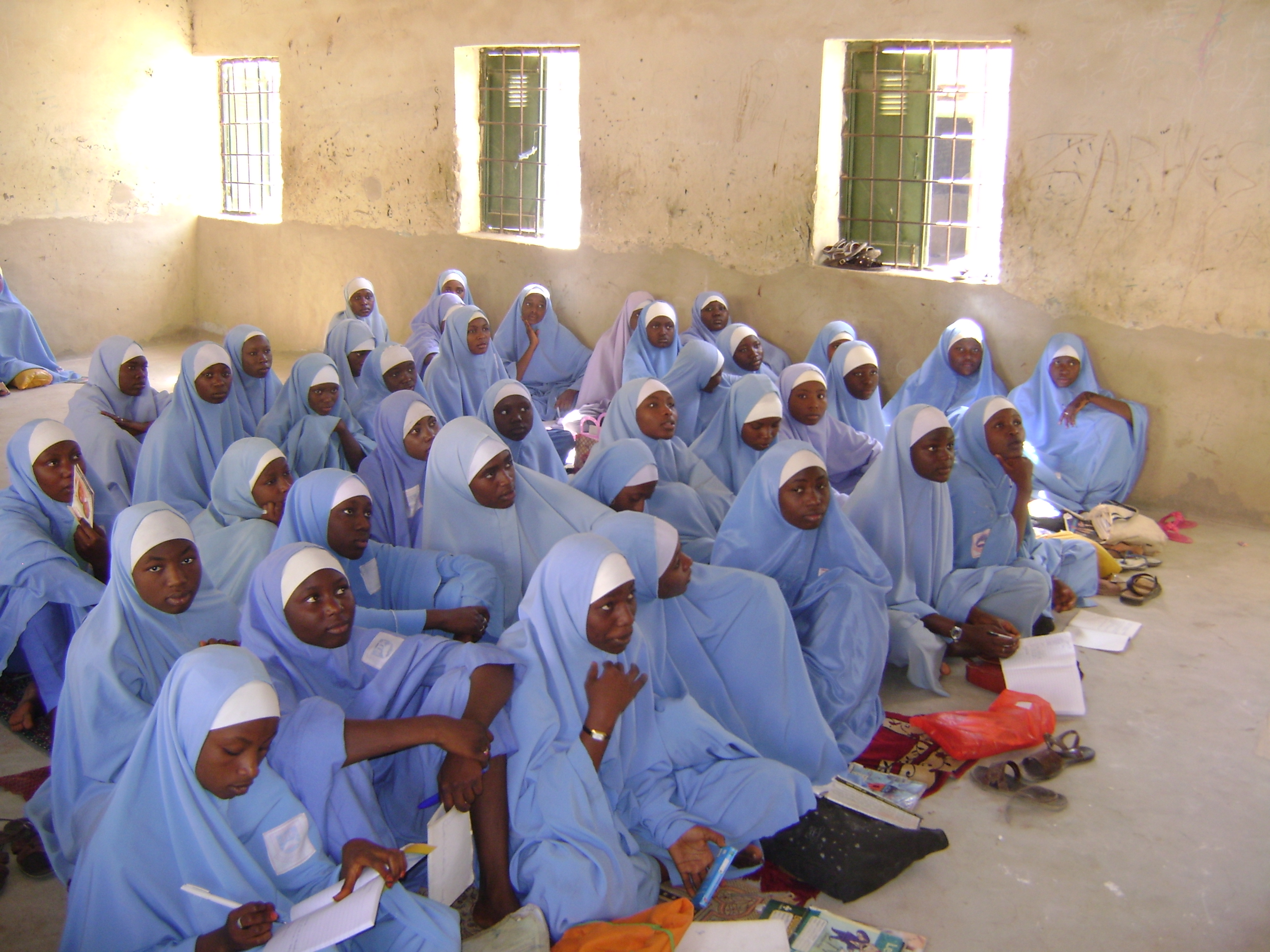
Sometimes I visit schools but it’s got a bit boring over the years because, despite my urging, my hosts usually want me to see several in a day, often no more than 1/2 hour per school.  During most visits, we walk around the site and visit a few classrooms.  Usually the school and the selected classrooms are dilapidated — government officials want to impressed upon me that the school (or by extension, the entire education system) needs more funds.  Or the school principal shows off a new laboratory or classroom or computer.  These rare displays are more heartening, but even in these cases, additional resources are requested in the name of “scaling up”.  It is fair game.  I represent an international organization after all and the needs are real. It’s just that these patent visits do blur together after a while.

School visits are more interesting when I can spend some time talking with teachers and students.  Normally, I only get to walk into a classroom for a few minutes.  The children stand up and say hello in unison.  “Bonjour monsieur”.  Sometimes they will chant a slogan or sing a patriotic song.  Always an uncomfortable moment with the adults holding forced smiles.  The teacher is usually nervous, sometimes irritated.  I’ll usually ask the teacher how many girls are in the class, what subject is presently being taught, how many kids have repeated their grade (sometimes I will take a poll).  I’ll stroll down the aisle (if there is one) and look at notebooks and textbooks. Sometimes (if time permits) I’ll ask one or two kids to recite a couple of lines from their books.  Then I ask them to explain what they’ve read.  They are usually scared witless.  I don’t think that I leave a very good impression of international organizations, Americans, white guys, or whatever.   What really ruins the mood is that I am accompanied by several government officials, who crowd the doorway and are nervous as hell that some one will say something embarrassing.  Very stressful for them, which is why they continuously want to move on to the next school.

A real school visit should last half a day because no one can keep up a facade for that long.  The conversation relaxes and I’m eventually ignored — after all, everyone has real jobs to do.  Government officials usually don’t have the patience for this kind of visit and after a while take off to hang out with local dignitaries over tea or lunch.  So I am thankfully left on my own.  I used to do more of this earlier in my career and when I was a doctoral student.  Time is more precious now, although spent hurriedly and ultimately badly.  I’ll wander around and chat with teachers, the principal, and others (the guard, the women who prepare lunch for the kids).

I’ll usually sit in the back a class for a while.  That’s probably where I learn the most.  The back rows are usually peopled with the ignored children: bad boys several years older than the others or listless kids with heads on folded arms.  Being with the older kids means I can hide behind the big ones and the teacher takes less notice of my presence.  I look over the sea of children and note that the prim and proper ones sitting in the front rows who are called on regularly whether their hands are up or not.  The middle rows are the most interesting.  Here are the boys who lunge across their desks with hands stretched towards the teacher,  “Hey, ooh, ooh” — the most hyper jump out of their seats.   The girls also raise their hands but less theatrically.  The best teachers can handle the middle masses like an orchestra.  Most struggle in a state of exasperation, spinning between the blackboard and then scanning the rows for the one who said something rude while their backs were turned. Some are tired and irritable and spend a lot of time yelling inconsequentially.  Most are trying really really hard to make a difference.

I say my goodbyes and there is a sense of camaraderie.  But even at the end of these visits there are expectations.  “So will you be able to fix the latrines? Give us books? Build a wall or fence to keep the thieves out?  Computers? Teacher quarters?” I respond with banal and vague promises that we will be helping the entire school system and that these benefits will cascade downwards to their schools.  A glint of disappointment, or “at least we tried”.  It’s fair game.

Next time I’ll describe a visit I made to a school in Cameroon about a year ago.