True-ishism I

I think that it was ‘93 or ‘94 and we really wanted to get to this village that was upcountry (beyond Parakou in Benin) before the end of the school day.  The dirt road we took was horrible, muddy, potholed. In Benin, we don’t try to avoid potholes, we choose them.” We were tossed and exhausted.  Several hours into the trip, we decided to ask for some reassurance.  We saw a guy walking along the road and pulled up alongside of him.

“Hello there, how are you? How is the family?  How long do you think it’s going to take us to get to XXXX (I can’t remember the name of the village)”

“It should take about two hours.”

“Oh shit!” (Well, I probably said “merde” considering that Benin is a francophone country).

“Okay, okay,” our friend answered, “one hour then.”

_________________________________________________________

It was ‘97 or ’98, and I had been staying for a few days in a village near Bembéréké, Benin.  I was interviewing teachers, the school director, parents, and pupils at the local primary school for my dissertation.  It was the only school in the area and children came from miles around.  One day, the school director received an official letter from the Ministry and he was perplexed.  He showed it to me and wanted some advice as to how to answer it.  The ministry wanted to know what the school was doing to attract more girls to attend. The letter indicated that additional money (“additional” not quite accurate since they usually don’t get much to begin with) could be made available to the school if they had increased or planned to increase the number of girls enrolled.  The director was a great person and had done a lot already to get all children in the community to come to school and to learn something.  He had one question for me:  “Should I report to the Ministry more or less than the number of girls we enroll in our school?”  We discussed this for a while.  The last answer he needed was, “you should report exactly the number of girls you currently have enrolled in the school”.  After much discussion (and beers) we decided that it would be best to under-report.

Now, for those puzzled by these exchanges, I believe that they reflect the essential conundrum of information collection in places where power relationships are lopsided (which is almost everywhere, but starker in developing countries).  Our fellow traveler in the first story (he on foot, us in a Landcruiser) simply wanted to make me happy.  He saw that I was upset by the first answer he gave me.  Rarely a good idea for a traveler of obvious wealth and probably influence to leave town pissed off.  At the very least it wouldn’t have been very courteous.  So the veracity of the information was less important than keeping our relationship on good standing.  By the way, I did explain why we were in a hurry, which led him to reassure me that we would arrive in time.  I don’t remember whether we did or not, but it probably didn’t matter.

For the school director, things are a little more complicated and require a little more context.  Although his reaction seems to reflect a certain penchant for corruption, this could not be further from the truth.  His professional dedication was exemplary.  He was always scrambling to find additional resources to keep the school running – fix a leaking roof, buy chalk, get medicine for a sick teacher, or pay the women who made lunch for the kids.  The Ministry of Education was always promising stuff (rarely money) that never arrived.  So his concern, which was based more on cynicism and pragmatism than venality, was how to get his hands on extra cash for the school.  In our discussion, we started from the following facts.  1. the Ministry could care less how many girls there were in the school.  2. if there was money given out for having a lot of girls in school already, the money would never arrive.  3. the letter clearly said that if the school was struggling to attract girls, it may be selected by an international NGO to take part in a project.  NGOs are more likely to deliver than the Ministry so…. By the way, girls outnumbered boys in this school.  A considerable accomplishment in this region of Benin.
Fair game

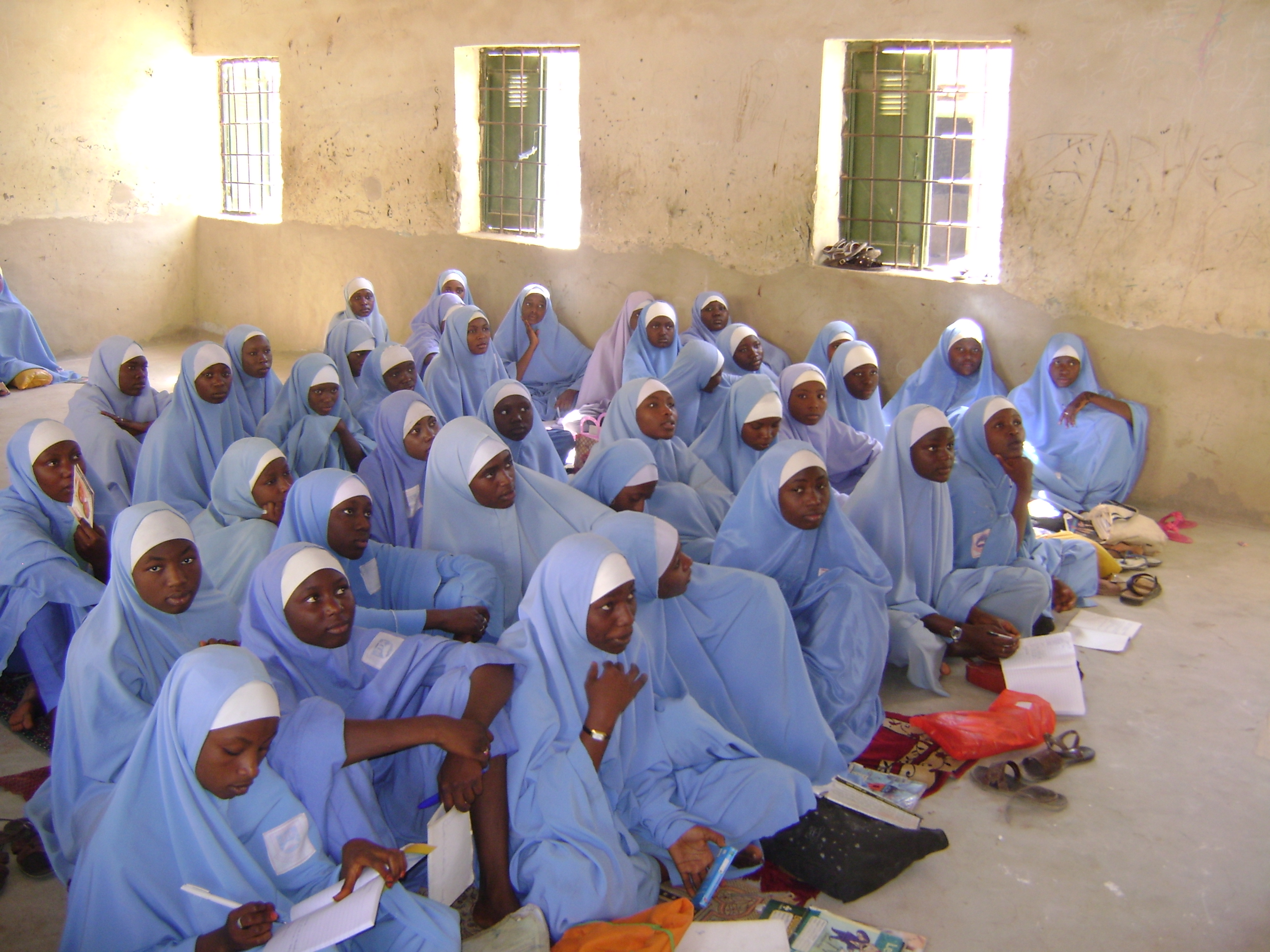
Sometimes I visit schools but it’s got a bit boring over the years because, despite my urging, my hosts usually want me to see several in a day, often no more than 1/2 hour per school.  During most visits, we walk around the site and visit a few classrooms.  Usually the school and the selected classrooms are dilapidated — government officials want to impressed upon me that the school (or by extension, the entire education system) needs more funds.  Or the school principal shows off a new laboratory or classroom or computer.  These rare displays are more heartening, but even in these cases, additional resources are requested in the name of “scaling up”.  It is fair game.  I represent an international organization after all and the needs are real. It’s just that these patent visits do blur together after a while.

School visits are more interesting when I can spend some time talking with teachers and students.  Normally, I only get to walk into a classroom for a few minutes.  The children stand up and say hello in unison.  “Bonjour monsieur”.  Sometimes they will chant a slogan or sing a patriotic song.  Always an uncomfortable moment with the adults holding forced smiles.  The teacher is usually nervous, sometimes irritated.  I’ll usually ask the teacher how many girls are in the class, what subject is presently being taught, how many kids have repeated their grade (sometimes I will take a poll).  I’ll stroll down the aisle (if there is one) and look at notebooks and textbooks. Sometimes (if time permits) I’ll ask one or two kids to recite a couple of lines from their books.  Then I ask them to explain what they’ve read.  They are usually scared witless.  I don’t think that I leave a very good impression of international organizations, Americans, white guys, or whatever.   What really ruins the mood is that I am accompanied by several government officials, who crowd the doorway and are nervous as hell that some one will say something embarrassing.  Very stressful for them, which is why they continuously want to move on to the next school.

A real school visit should last half a day because no one can keep up a facade for that long.  The conversation relaxes and I’m eventually ignored — after all, everyone has real jobs to do.  Government officials usually don’t have the patience for this kind of visit and after a while take off to hang out with local dignitaries over tea or lunch.  So I am thankfully left on my own.  I used to do more of this earlier in my career and when I was a doctoral student.  Time is more precious now, although spent hurriedly and ultimately badly.  I’ll wander around and chat with teachers, the principal, and others (the guard, the women who prepare lunch for the kids).

I’ll usually sit in the back a class for a while.  That’s probably where I learn the most.  The back rows are usually peopled with the ignored children: bad boys several years older than the others or listless kids with heads on folded arms.  Being with the older kids means I can hide behind the big ones and the teacher takes less notice of my presence.  I look over the sea of children and note that the prim and proper ones sitting in the front rows who are called on regularly whether their hands are up or not.  The middle rows are the most interesting.  Here are the boys who lunge across their desks with hands stretched towards the teacher,  “Hey, ooh, ooh” — the most hyper jump out of their seats.   The girls also raise their hands but less theatrically.  The best teachers can handle the middle masses like an orchestra.  Most struggle in a state of exasperation, spinning between the blackboard and then scanning the rows for the one who said something rude while their backs were turned. Some are tired and irritable and spend a lot of time yelling inconsequentially.  Most are trying really really hard to make a difference.

I say my goodbyes and there is a sense of camaraderie.  But even at the end of these visits there are expectations.  “So will you be able to fix the latrines? Give us books? Build a wall or fence to keep the thieves out?  Computers? Teacher quarters?” I respond with banal and vague promises that we will be helping the entire school system and that these benefits will cascade downwards to their schools.  A glint of disappointment, or “at least we tried”.  It’s fair game.

Next time I’ll describe a visit I made to a school in Cameroon about a year ago.