
Fighting fascism – Day Fifty-Three – A Reckoning

In my initial blog, written after the inauguration on January 21, 2025, I stated: “The new American administration intends to constrain civil liberties, freedom of speech, and opposition. It will remove economic opportunities for those who are not already rich and protections for minorities. It plans to undermine the nation’s education system, health care system, social safety net, and other institutions that provide support and reassurance to the average person. It will try to reverse efforts to protect the environment. It will “deregulate” or, in other words, remove guardrails that prevent the greedy from further ravaging our land, people, and spirit. It seeks to orient the justice system to protect the interests of the few rather than everyone and to weaken the rule of law. It will more readily resort to violence. It will try to undermine our democracy. It will try to stay in power forever. This is fascism.”

The question for today is how far along have we slipped towards fascism in the U.S.? As I wrote in an earlier blog post, I have been counting the days since the inauguration of the current president because Adolf Hitler was able to establish his fascist regime in 53 days. Well, today’s blog on Day 53 is a reckoning.

The good news is that we are nowhere near where Hitler stood 53 days after he was appointed chancellor. He was able to take advantage of weak opposition, a constitution he twisted to his ends, economic and social chaos and a well-organized and loyal party base to essentially establish a fascist regime. I do not believe that the U.S. have fallen that far yet, although we have certainly made a lot of “progress” in the wrong direction. The administration has successfully taken action on many fronts that represent a definite slip towards fascism.

  • The administration’s purge of the civil service and the witch hunt of those in the Department of Justice and the FBI appear to be proceeding according to plan.
  • The dismantling of USAID and other federal agencies has left thousands unemployed, key programs in tatters, and beneficiaries bereft of much needed and promised assistance.
  • The defunding of scientific research and the removal of data sets from the public view. The emasculation of the CDC. All this will contribute to an attack on the health of the American public.
  • DOGE has been one of the most controversial actors put in play by the administration, what with the unequal power and responsibility that has been given to Elon Musk, an individual who has not been vetted by any government institution.
  • Deportations seem to be proceeding more slowly than expected, but the administration will certainly want to do everything it possibly can to accelerate. In any case, the fear that has been spread throughout the immigrant community is tremendous.
  • Trans persons have been singled out as being practically inhuman.
  • The continuous onslaught on free speech has been crowned with a particularly egregious act: undermining the right to protest at universities. Behind flimsy excuses that this is in fact a call to combat antisemitism, we know that the freezing of grants to Columbia and threats to other universities is just a test case for squashing any future student protest.
  • The U.S. government’s attempt to silence Mahmoud Khalil, a peaceful protester, by stripping him of his legal residency and deporting him. This is an attack on the First Amendment that sets a particularly dangerous precedent.
  • The administration has literally turned the international order on its head as the president demonstrates over and over again that he is in fact a Russian asset. Allies are re-assessing their relationship with the U.S., bracing for trade wars, considering the potential end of a world order that was established by the U.S., and reeling in disgust as they watch the U.S. drift towards fascism. The irony is that this administration may end up becoming the great unifier of Europe. Of note: We’ve learned that there are a number of American researchers that have asked the Marseille-Aix University to accept their applications.
  • The list goes on.

The Democratic Party has not yet stepped up to truly play the role of an opposition party. But there have been many actions taken across the country to protest the administration’s fascist tendencies. Boycotts and demonstrations, disruptive townhall meetings, a vibrant resistance movement at local levels, mostly theme oriented, and the development of media sources that are outside the mainstream. Bernie Sanders and others have been holding rallies all over the country as part of a “Stop the Oligarchy Tour”. State level authorities in California, Oregon, Minesota and New York appear to be taking the lead on many issues, although there are also states that are at the forefront of eroding democracy (Florida, Texas, and others that have restricted voting rights, for example).

The court system has been fully mobilized to fight the administration’s constitutional overstep. According to the litigation tracker, 119 cases are currently winding their way through the justice system, many led by a grouping of state attorneys. These cases are challenging everything from the very existence of DOGE to the constitutionality of executive orders on birthright citizenship, punishment of sanctuary cities, expedited deportation, disclosure of personal and financial information, defunding of USAID, termination of probationary employees, the ban of transgender individuals serving in the military, immigration enforcement at schools and places of worship, denying press access to the White House, banning of DEI programs, removal of information from websites, actions against FBI/DoJ employees, as well as many others.

There have been some wins, but time is working against us. The administration is aggressively carrying out its self-anointed “mandate” and not waiting for (and might not have any intention of complying with) the results of these cases. There have been some bright lights, such as the recent Supreme Court case and that of lower courts that have challenged the cancelling of foreign aid. The trillions of dollars question: will/can the administration ignore these rulings? If they do, that will be a clear indication that fascism is taking hold. The administration has requested the Supreme Court to rule on the executive order regarding birthright citizenship – it will be very telling how it rules on this.

Will it take 100 days rather than 53? I’ll stop counting but will continue to post blogs. I have encouraged readers to resist in any way they can and even take small steps – every day: writing or phoning congresspersons and state delegates to express disfavor on select issues, engaging in boycotts, signing petitions, attending demonstrations and townhall meetings, talking to strangers and focusing on both the local and the national, and supporting organizations that are taking on the fight. Of course, at this point, it is easy to get discouraged. However, they expect us to “roll over and play dead” – the infamous advice of James Carville. The goal of attacks on free speech, for example, is largely to get Americans to self-censor. If we collectively refuse to do so, then these attacks on the First Amendment will fail. We must continue to resist. We can’t depend on anyone else to do this for us.
Fighting Fascism – Day Forty-three – combatting the assault on knowledge

Working in the field of international development aid over the last 40 years, I have incessantly been told that policies should always be “evidence-based”. This means we should examine and analyze the data to determine whether an intervention, an idea, or a decision is likely to have the intended outcome. Sometimes I bucked at this mantra when I observed how hard and costly it was to get the necessary data to make fully informed decisions (see my blog from 2011, which injects a bit a humor into the notion of data collection). Sometimes the perfect works against the good. But generally, the notion that the collection of data and a thorough analysis of that data should be at the heart of decision making and opinion formation seemed to me to be a good thing.

According to the current administration, decisions should no longer be “evidence-based” but ideologically based – often falsely sold as “common sense”. When data and research contradict the firmly held belief of the administration, the instinct is to hide it. This is a traditional fascist strategy: When the truth is inconvenient, the best thing to do is to destroy it.

This administration has been engaged in a systematic onslaught on knowledge production and the availability of data and information produced by government (or financed by government) that is “inconvenient”. This will lead to extremely damaging consequences in terms of accountability, protecting the public, economic development, scientific progress, freedom of speech, and technological innovation. Any research initiative or data collection initiative that is counter to the firmly held beliefs of the administration is to be dismantled.

Federal agencies, including the Centers for Disease Control and Prevention (CDC), have been forced to remove public health data from their websites. Over 3,000 pages were altered or removed from the CDC’s website, affecting information on chronic diseases, sexually transmitted infections, and reproductive health. The CDC’s data portal was also taken offline, hindering access to vital health statistics. Approximately 8,000 webpages containing LGBTQ+ content were removed across various federal agencies, including the Department of Education and the Department of Health and Human Services.

The administration has frozen billions of dollars in research funding, particularly affecting the National Institutes of Health (NIH). An order suspended NIH grant funding, effectively halting much of its $47 billion budget. Additionally, on February 7, 2025, the NIH announced a cap on indirect cost reimbursements at 15%, a drastic reduction from previous rates that averaged between 30% and 70%. This policy shift threatens the financial stability of research institutions, potentially leading to layoffs, hiring freezes, and the termination of ongoing projects.

The reclassification of federal employees under “Schedule F,” have raised alarms about the potential politicization of economic data. Experts warn that allowing political appointees to replace career civil servants could undermine the objectivity of critical economic statistics, such as unemployment rates and inflation figures, which are essential for informed decision-making by businesses and policymakers.

The administration’s actions have also affected scientific pursuits in ways that go beyond those orders. The dismantling of USAID has halted clinical trials abroad, leaving participants with experimental drugs and devices still in their bodies. 

A recent executive order closed the database tracking misconduct by US police.

In response to these deletions, academic institutions, archivists, and advocacy groups have initiated efforts to preserve endangered data. The End of Term Web Archive and the Internet Archive’s Wayback Machine have been instrumental in capturing and maintaining copies of removed content. Legal actions have also been taken; for instance, a federal judge issued a restraining order requiring the restoration of certain health-related websites, acknowledging the critical need for public access to this information.

What can we do about this? First and foremost, we need to provide support and kindness to our friends working for the federal government and for organizations and institutions that are directly and indirectly affected by this assault on science. Second, we need to support efforts by organizations such as the Internet Archive to protect databases and research.

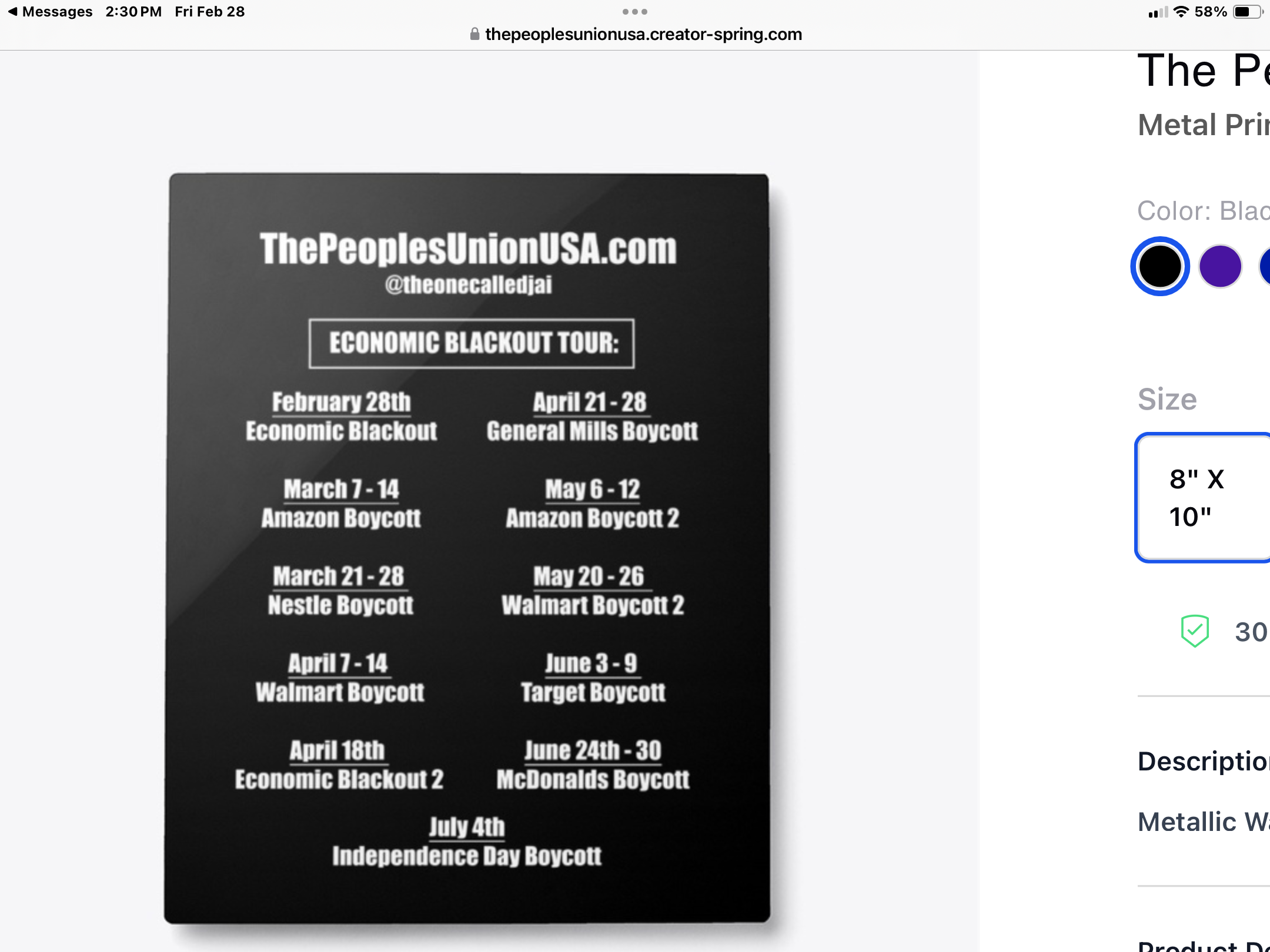
There are events happening that people should know about. Last Friday was the first economic boycott. I don’t know what the outcome of that was. Here is a list of upcoming actions we should know about.

Fighting fascism – Day Forty-One – dealing with shame

Fighting fascism – Day 41 – Shame on our administration

I am thoroughly disgusted by the grotesque behavior of the President and Vice-President of this administration towards President Zelensky of Ukraine. In today’s blog, I defer to the great Robert Reich, who made today an exceptionally impassioned and eloquent call to action in his Substack article (with some specific suggestions) . I found it both powerful and insightful. I have cut and pasted it here.

The shame of it

But it’s not our shame

Friends,

A brief word today at the end of the sixth horrific week of Trump 2.0 (before I post my weekly cartoon).

After Trump and Vance’s disgraceful treatment of President Zelensky on Friday, some of you might feel ashamed of America. You might even feel ashamed to be an American.

The proper locus of shame is Trump and Vance. I’m ashamed that they, along with Elon Musk, are now leading our nation. I’m also ashamed that their Republican lackeys in Congress are enabling and encouraging them. I’m ashamed that Democrats in Congress are so supine.

Yet I urge you not to give in to the sort of resignation or cynicism that believes nothing can be done — that we are powerless and have no choice but to watch our nation and everything it has stood for be hijacked by Trump, Vance, and Musk.

We have enormous power and many choices. When the American people understand what is happening — as they are beginning to — no Republican in Congress will be safe. Even now, majorities of independents and Democrats, and even some 30 percent of Republican voters, believe we must stand with Ukraine.

The fundamental choice has not been as stark since World War II: democracy and freedom, or dictatorship and tyranny.

Trump and his sycophants are siding with the latter. The rest of us must loudly, proudly, and boldly proclaim our allegiance to the former.

Trump is emboldening the dark forces of dictatorship everywhere. Taiwan is reporting more Chinese military drills around the island.

Europe and all free people around the world must rally at this time of American emergency. If the United States won’t seize Russia’s frozen assets and put them into an account for Ukraine to pay for further arms, Europeans must do this and let Ukraine buy from European defense contractors.

If you yourself want to help Ukrainians, you might consider United 24 (the Ukrainian state platform for donations, including many important projects); RAZOM (an American NGO, tax-deductible for U.S. citizens, that cooperates with Ukrainian NGOs to support civilians); Documenting Ukraine (an initiative that helps give Ukrainians a voice, also tax-deductible for Americans); and Come Back Alive (a Ukrainian NGO that supports soldiers on the battlefield and veterans).

A final thought. What we are witnessing from Trump and Vance and Musk — their bellicose bullying, their outright lies, their fear-mongering, their disrespect and disdain for others, their emboldening of dictators around the world — is not all bad if it awakens America.

The more Americans see and absorb the horrors of this regime, the greater the likelihood we will mobilize against it. Not all of us, of course, but the great majority.

As bad as this regime gets, it will clarify for Americans what is happening to this country, and what we must do to get it back on the track toward social justice, democracy, and widespread prosperity.

Yes, the regime is harming many innocent people. Its lawless cruelty is sickening. But there will be a reckoning.

I have always believed America is not a nation of bullies. We have protected the vulnerable, comforted the afflicted, granted refuge to those fleeing violence and persecution, and given voice to those who otherwise would not be heard.

These ideals are found in the Declaration of Independence, the Constitution and the Bill of Rights, Lincoln’s Gettysburg Address, Emma Lazarus’s poem affixed to the Statue of Liberty, FDR’s second inaugural address, and Martin Luther King Jr.’s “I Have a Dream” sermon at the 1963 March on Washington.

They connect us with previous generations of Americans who risked everything —some of whom sacrificed their lives — to preserve democracy and achieve a greater good.

Do not feel shame in America. Feel pride in the ideals we share. Feel honored that you are an activist warrior on the right side of history. Feel strength in our conviction. Feel power in our cause.

We will prevail against Trump — against his bullying, his brutality, and his barbarity.

A final point regarding Ukraine. I understand that there are demonstrations happening across the country in support of Ukraine. I urge you to look for such actions in your community and participate if you can. I saw that 5calls.org also has an entry for calling representatives on this issue.

Fighting fascism — Day Thirty-Nine – “Fraternizing with the enemy

One of my previous blogs discussed the importance of talking with strangers. I encouraged readers to take advantage of opportunities to engage with people in public places as a way to combat fascism. Here, I want to delve more into the issue of talking to people you know who are misinformed on a particular topic or hold very strong opinions that are counter to the ones discussed in these blogs.

I must admit that I don’t know anyone who voted Republican in the last elections (maybe I do and it’s a secret). Years ago, I could boast a clutch of Republican friends – now none. This means that I have few opportunities to discuss the political situation with people I know and with whom I do not agree. I know that that is not the case for all of you. A good friend told me that her mother and sister have bought into an extreme version of MAGA (very religious, millenarian, super “anti-DEI”, and in excessive fascination of Trump and Musk). Conversations leave her very upset and for good reason – they often become emotional and vitriolic. Another friend met some Republicans in Egypt and felt ill-prepared to engage in a full-blown discussion on taxes, DEI, and other issues. So here are some tips on how to carry on these conversations.

Be informed as much as possible on the hot topics. Whether you initiate discussions or are ambushed, it is good to know your stuff. I haven’t put much focus on getting informed as a way to fight fascism. This is partly because I thought that we were already drowning in information. Although partly true, I think that it would be a good idea to be prepared to discuss the hot button issues that are on today’s agenda: the attacks on the federal government;  foreign aid, diversity, equity and inclusion, immigration, and Ukraine to start. (I added a few links to get started – you can certainly do some research on AI or search engines to find out more). On the suggestion of a good friend, Colin Woodard is a very interesting source for understanding the enduring and growing split in the American polity between right and left.

Engage as an anthropologist rather than a combatant. I already discussed this in my former blog but it would be good to remind us of some key principles. The following is what I think is a pretty good guide for how to engage that I got from ChatGPT (who would have thought that ChatGPT would want to combat fascism – I’m going to write a future blog on the role of AI in the resistance).

Set the Right Mindset

  • Approach with curiosity, not combat – Think of the conversation as an opportunity to understand their perspective rather than a debate to win.
  • Acknowledge common values – Even if you disagree on policies, you might both care about fairness, safety, or opportunity but see different ways to achieve them.
  • Decide your goal – Are you trying to learn, share your views, find common ground, or persuade? Adjust your approach accordingly.

Listen Actively and Respectfully

  • Ask open-ended questions – “What led you to that perspective?” or “How do you see this issue affecting your life?”
  • Don’t interrupt or dismiss their views outright – Instead of “That’s ridiculous,” try, “That’s an interesting take—I hadn’t thought about it that way.”
  • Paraphrase their argument – “It sounds like you’re saying [X] because you believe [Y]. Did I get that right?” This helps avoid miscommunication.

Express Your Views Thoughtfully

  • Use “I” statements instead of “you” accusations – Instead of “You’re wrong about this,” say, “I see it differently because…”
  • Acknowledge complexity – Say, “I get why people feel strongly about this,” or “It’s a complicated issue with a lot of perspectives.”
  • Find common ground – If possible, highlight shared concerns or values before discussing where you diverge.

4. Manage Emotions and Tension

  • Stay calm and composed – If you feel yourself getting heated, take a breath or suggest a break.
  • Avoid personal attacks – Focus on ideas, not the person.
  • Know when to disengage – If the conversation is unproductive or hostile, it’s okay to say, “I appreciate the discussion, but I think we should pause here.”

5. Accept That You Might Not Change Their Mind

  • People rarely shift political views immediately. If you plant a thoughtful idea, it may influence their perspective over time.
  • Sometimes, simply having a respectful conversation can reduce hostility and reinforce mutual respect.

Use one’s expertise to one’s advantage. We are all experts in something – education, foreign policy, LGBTQ+, immigration, etc. Use your knowledge to advocate for a better world without fascism. Create situations where you can share your expertise. Here are a couple of examples.

My wife volunteers for SOS Mediterranean here in Marseille. SOSM is an organization that rescues refugees who are traversing the Mediterranean Sea in leaky boats for European shores. Most refugees leave from Libya where they experienced unimaginable horrors. SOSM is considered by many on the right in Europe as a very controversial organization, accusing them of increasing the access of immigrants to Europe. They are definitely in the crosshairs of the right-wing government in Italy (many of the refugees that are rescued by SOSM are taken to Italy because that is the closest destination, which is the practice endorsed by international law). As a volunteer, Laurence often makes presentations at schools and other sites to explain what SOS Mediterranean does, the issues that it attempts to address and that they are an organization driven by humanitarian aims, not political ones. The encounters are generally very positive. She is well informed and knows how to address participants who hold different perspectives.

A friend recently went to his mother’s church where he made a presentation on the importance of USAID diplomacy and defense cooperation and why maintaining our alliances is critically important to secure in US national interest. This is a subject on which he has intimate professional and personal knowledge. He continues to seek venues where he can express his deep knowledge on these topics to a variety of stakeholders who might not start from the same place.

I would like to leave you with something that Umberto Eco wrote about thirty years ago on “recognizing fascism”.  He lists fourteen features or that can promote fascism. “These features,” writes the novelist and semiotician, “cannot be organized into a system; many of them contradict each other, and are also typical of other kinds of despotism or fanaticism.” But it is enough that one of these features is present present to allow fascism to coagulate around it. I count about ten features that buttress the current administration. Here is his argument in his own words.

Fighting fascism — Day Sixteen – the importance of international aid

The brutal manner in which the administration is shutting down USAID is telling of the kind of strategies they will implement going forward. They are relying on a non-governmental entity to do their bidding; they are destroying an institution that is a key part of our government so that they can ensure total loyalty and control; they are acting in extra-legal manner to see if they can get away with it.

Full disclosure. I am a big fan of USAID. They have made a tremendous contribution to improving the lives of people all over the world, particularly of those who were most vulnerable. It has established and maintained a strong network of dedicated professionals who have acquired unequaled experience and commitment in the area of international development, and have conducted essential research on how to make things in developing countries work better – all of which now may be lost. US foreign aid is not only essential for improving the world for others, it represents a reflection of what is good about the US – generosity, compassion, and helpfulness. Here’s a website that has surprisingly not been taken down that provides some notions of what is good about USAID.

Now, another full disclosure. Presently retired, I worked in the field of international development all my professional life. I specifically focussed on helping education systems in development countries – in Africa, the Middle East, and Asia. I worked for more than twenty years for the World Bank, which is an international organization and before that, as an independent consultant and as a member of a independent non-profit organization, where I worked on many projects and initiatives that were financed by USAID, always in the education sector. As a result of our work, millions more children go to school (that’s right, millions), hundreds of thousands of teachers teach better, millions of textbooks and other teaching aids ended up in children’s hands, universities have been established, vocational and technical training oppportunities have been created to ready youth for the world of work, and millions more have become literate.

Of course, development assistance could be done more effectively, efficiently, with greater success, with a more sustainable impact, etc.  – but who can say otherwise about any field? However, I would never say that such aid should end or that the institutions that have supported it should be dismantled. Many vulnerable people living in many developing countries will be terribly impacted by this freeze. What would be destroyed outweighs by far what would be created. And what exactly would be created? That is the 40 billion dollar question.

What can be done to stop this? What anti-fascist action should be taken in this regard? This is tricky because USAID is not an issue-bound concern and not often a top priority for many. There was a rally in Washington yesterday in support of USAID where senators and Representatives of the House, as well as others came out strongly against the administration’s war on this agency. You may want to call your senator or Representative to voice your own concern. But there must be more we can do.

I am not very happy with the Democratic National Committee in general these days and on this issue in particular. I feel that they should react more fiercely to what the administration is doing, particularly with regards to the dismantling of government institutions, such as USAID. When I go to their site, it seems to only be focused on fund raising and elections rather than organizing resistance now. I guess I’m in a grumbling mood today.

In any case, along other lines, here are a couple of places where you might be able to undertaken your “daily anti-fascist act”.  I’m sorry they are not something specific on USAID.

One is Indivisible, which has organized a number of actions in Senator offices around the countries to demand a stop to the dismantling of government. They have virtual events as well. I’m planning to attend one to see what it’s all about.

There is also an organization called Earth Justice: “(which) is the premier nonprofit public interest environmental law organization. (It) wield(s) the power of law and the strength of partnership to protect people’s health, to preserve magnificent places and wildlife, to advance clean energy, and to combat climate change.” They have a great slogan: “We are here because the earth needs a good lawyer.” Politicsgirl speaks highly of this organization.