
Are we all becoming enemy combatants?

So happy that many of you made it to the demonstrations on April 5th. I wish I could have joined in. Democrats Abroad had organized events all over France, but unfortunately, not in Marseille. We are organizing one in my town (Marseille) on April 19th though. Some people are nervous about attending because it might incur the wrath of customs officials when they come visit the States.

Today, I want to discuss immigration, a subject that is of great importance to me as the son of immigrants to the US. The front page has been consumed lately by the tariff discussions, but the administration’s other attempts to undermine our polity, society, and economy continue unabated. And central to this is the aggressive attempt to punish the immigrant community through threats of and actual imprisonment and deportation.

For example, the New York Times reports that the administration has moved aggressively to revoke the temporary legal status of hundreds of thousands of immigrants who were allowed into the country under President Biden by revoking their social security number. The move moves individuals to the “death list” of the Social Security system with the objective that they would “self deport”. Without a social security number, it because exceedingly difficult to find work, housing, credit, or anything else needed to live normal lives. The initial names are limited to people the administration says are convicted criminals and “suspected terrorists.” But officials said the effort could broaden to include others in the country without authorization.

The immigrant community is made up of persons with a diversity (can I still use that word?) of different administrative statuses. There are many who are American citizens, others who have green cards, others with temporary visas of varying lengths of time, and yet others who have acquired one of a panoply of authorizations to remain in the US. Then there are those in “limbo” awaiting a change in status and finally those who have no status at all (either they never could acquire one or the one they had “expired”). The line between these different categories is blurring as the administration attempts to lump everyone into the same category.

The administration has basically used the argument that the US is at “war” with immigrants, who should be treated as “enemy combatants”. This is the underlying logic of using the Alien Enemies Act as a legal justification for imprisonment and deportation without due process.  It is important to keep this in mind as actions proliferate against the US immigrant community. It is an effort to transform many who live in the US into less than human.

The legal arguments over the use of the Alien Enemies Act are very telling. Sotomayor wrote that the implications of the administration’s legal stance is that “not only noncitizens but also United States citizens could be taken off the streets, forced onto planes, and confined to foreign prisons with no opportunity for redress if judicial review is denied unlawfully before removal.”

There have been court cases galore to challenge the administration’s immigration policies. Some successful and others not. For example, although the Supreme Court has allowed the use of the AEA, it has ruled that the administration cannot deport people without giving them a chance to defend themselves.  The Supreme Court also endorsed a trial judge’s order that requires the government to “facilitate and effectuate the return” of a Salvadoran migrant it had wrongly deported to a notorious prison in El Salvador. Federal judges in both New York and Texas have blocked the deportations of Venezuelan.

Even with the courts against them, the administration seems to find ways to ignore the rulings. In the case of Abrego Garcia, the Salvadoran who the administration admits was wrongly deported, they are claiming that because he is in El Salvador, the president has the only authority (not the courts) to determine whether Mr. Garcia’s return should be pursued because it has become a matter of foreign policy!

The administration is also prioritizing those who express opinions that it considered counter to its ideological stance. Foreign students who demonstrated against the treatment of Gaza’s Palestinian are being rounded up. More than 300 have had their visas revoked. Even lawyers who are US citizens who defend these students are being threatened. The U.S. border officials are using more aggressive tactics at ports of entry as the administration scrutinizes green card and visa holders who have expressed opposition to its policies.

Whatever the legal tussles that are happening, people are being treated with cruelty. Men, women and children are being traumatized by these actions. These are our neighbors, friends, colleagues, employees and we have a responsibility towards them.

What can we do? First and foremost, we must protect those of the immigrant community who are threatened. In Sonoma County in California, the North Bay Rapid Response Network has a hotline that can reached if someone is being threatened by ICE. There are certainly similar resources available in your community.

The National Immigrant Law Center has many resources for immigrants and those who want to support them. For example, they delineate what you should do if you are arrested or detained.

Voting and the SAVE Act

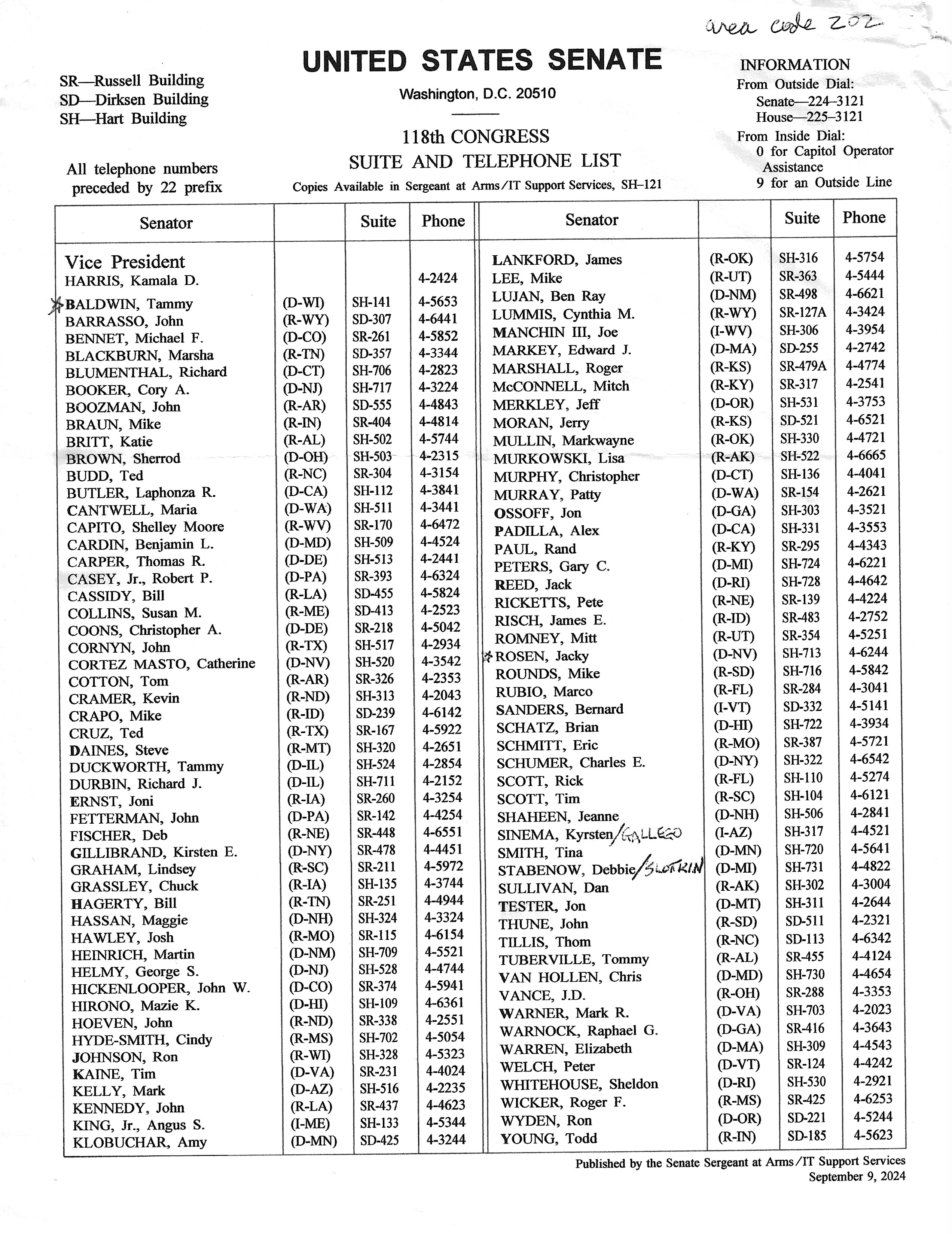
This is another good week to call your members of Congress and express outrage. The House passed the SAVE Act, which will make it dramatically more difficult for millions of eligible American citizens to register to vote if the Senate passes it too, so it’s time to start campaigning for the Senate to reject it. The Capitol switchboard phone number, where you can ask to be connected to your members’ offices, is (202) 224-3121.
Fighting fascism – RIP Department of Education?

I am particularly saddened by the decision to close the Department of Education. I am not an expert on the American education system, having spent my career focusing on developing countries (even though my kids did all their schooling in the US). So, I am not particularly knowledgeable regarding the implications of the closure. However, I find it upsetting that the administration has decided to closethe one institution that holds education as a national mandate.

By shutting down the department, the administration claims that it is returning the responsibility of education to the states, thus reducing bureaucracy and increasing “choice” (a many-edged sword, by the way). However, considering that the states have always managed and financed education in the US, it is unclear what responsibilities (and resources!) would consequently be transferred to the states following the dismantling of the department.

The Education Law Center states that, “…the Department’s core functions have been to support states’ and school districts’ efforts to provide educational access and opportunity, equity, and excellence for students and families across the nation and to ensure that states and districts comply with key federal laws including those that protect civil rights” and claims that this objective is directly challenged by the Department’s closure.

It appears that closing the department could lead to the following:

  • The loss of federal funding (such as Title I and Pell Grants) to poorer schools and poorer students, equaling at least $100 billion. Many of these poorer schools are in districts and states that have voted for the current administration. Wealthier states and districts would likely thrive under greater autonomy, while poorer areas could suffer from the absence of federal support and regulations that ensure more equal access to resources. Ironically, but we know this from many cases, it will be the state governments that have been strong advocates of the administration that will probably suffer the most.
  • The loss of educational standards: The Department of Education sets and enforces key national standards and policies related to education, such as the “Every Student Succeeds Act” and federal guidelines on Title IX. With more variation in educational standards, funding formulas, and teacher qualifications from one state or district to another, well-funded and efficient education systems will benefit but those less capable of managing education independently will suffer.
  • The loss of education statistics: The Department of Education conducts research and collects data on educational outcomes, helping to shape evidence-based policies. The absence of this data would hinder the ability to track national trends, evaluate policies, and assess the effectiveness of educational interventions. This would make it more difficult to address issues like achievement gaps or adapt to new challenges in education.
  • Narrowing of Civil Rights and Equal Access to Education: The Department enforces civil rights laws, including those that prohibit discrimination based on race, gender, disability, and other factors. Its absence might lead to weaker protections against discrimination, potentially reversing progress in civil rights and equal access to education. It could also spell the end of special programs for underserved populations, including students with disabilities, English-language learners, and minority students.

These are only a few of the implications of the closure. I haven’t mentioned the impact on higher education, which I understand is also signficant.

Ultimately, such a move would require restructuring of how education is governed and funded in the United States. Moving responsibilities around from the top to the bottom or from one bureaucracy to another (student loans going to the Small Business Administration; nutrition programs to HHS) just creates chaos rather than efficiency.

Furthermore, and perhaps most importantly, every nation has a national education strategy and system for a reason. I am not sure, but I think that the US would become one of the only countries in the world that would not have the equivalent of a national education ministry. Other federal countries such as Brazil, Germany, and Pakistan have federal/national education ministries. The point being that having a national education strategy is important in such a politicized field as education. Having none and no political instrument for defining or monitoring one is certainly a recipe for disaster.

BTW, the Department is using Title IX to go after districts and states where trans athletes can still participate in sports activities (including having access to locker rooms). The key mechanism that the government has had to fight discrimination is being used in a completely cynical manner. The administration seems more concerned about this than student academic achievement or racial equality or student disability. Regarding the future of civics education, it appears that the Oklahoma education authorities have included how the 2020 elections were “stolen” as a social studies topic. A fine example of state authority.

What can we do about the frontal assault on the education system? The American Federation of Teachers and the American Association of Professors have sued the administration regarding the closure of the Department. I came up with a few things in my last blog about education that I will copy below. I don’t really have anything new to add at this point. If you do, please let me know.

I remember a conversation I had many years ago with someone who was arguing that the most important educational investment that could be made was to elite schools. That training leaders should be the priority of education systems. I responded at the time, who wants to be the leader of a bunch of uneducated fools? I guess we have the answer to that question now.

From my blog last month on education: “…I think that the future of resistance across the board, not just education, lies at the local level. It will need to consolidate at the state level (irony of course, considering all the blabbering about states rights), but things happen at the school and school board level. Make sure that the right people (maybe you) are elected to school boards and PTAs. Attend local townhall meetings and demand to know how the disabled, other disadvantaged groups, children of undocumented workers and others are going to get a good education; challenge attempts to silence teachers, ban books, allow ICE agents into schools, or post the ten commandments; and just generally be irritatingly vocal about protecting children and education at the local level. Network with those in other school districts and other schools. Here is a list of organizations that are fighting the good fight, from what I understand.

  1. American Federation of Teachers (AFT): aft.org
  2. National Education Association (NEA) : nea.org
  3. Education Law Center (ELC) : edlawcenter.org
  4. Southern Poverty Law Center (SPLC) – Learning for Justice: learningforjustice.org
  5. Network for Public Education (NPE): networkforpubliceducation.org
  6. Parents Together : parents-together.org

Fighting Fascism – Day Forty-three – combatting the assault on knowledge

Working in the field of international development aid over the last 40 years, I have incessantly been told that policies should always be “evidence-based”. This means we should examine and analyze the data to determine whether an intervention, an idea, or a decision is likely to have the intended outcome. Sometimes I bucked at this mantra when I observed how hard and costly it was to get the necessary data to make fully informed decisions (see my blog from 2011, which injects a bit a humor into the notion of data collection). Sometimes the perfect works against the good. But generally, the notion that the collection of data and a thorough analysis of that data should be at the heart of decision making and opinion formation seemed to me to be a good thing.

According to the current administration, decisions should no longer be “evidence-based” but ideologically based – often falsely sold as “common sense”. When data and research contradict the firmly held belief of the administration, the instinct is to hide it. This is a traditional fascist strategy: When the truth is inconvenient, the best thing to do is to destroy it.

This administration has been engaged in a systematic onslaught on knowledge production and the availability of data and information produced by government (or financed by government) that is “inconvenient”. This will lead to extremely damaging consequences in terms of accountability, protecting the public, economic development, scientific progress, freedom of speech, and technological innovation. Any research initiative or data collection initiative that is counter to the firmly held beliefs of the administration is to be dismantled.

Federal agencies, including the Centers for Disease Control and Prevention (CDC), have been forced to remove public health data from their websites. Over 3,000 pages were altered or removed from the CDC’s website, affecting information on chronic diseases, sexually transmitted infections, and reproductive health. The CDC’s data portal was also taken offline, hindering access to vital health statistics. Approximately 8,000 webpages containing LGBTQ+ content were removed across various federal agencies, including the Department of Education and the Department of Health and Human Services.

The administration has frozen billions of dollars in research funding, particularly affecting the National Institutes of Health (NIH). An order suspended NIH grant funding, effectively halting much of its $47 billion budget. Additionally, on February 7, 2025, the NIH announced a cap on indirect cost reimbursements at 15%, a drastic reduction from previous rates that averaged between 30% and 70%. This policy shift threatens the financial stability of research institutions, potentially leading to layoffs, hiring freezes, and the termination of ongoing projects.

The reclassification of federal employees under “Schedule F,” have raised alarms about the potential politicization of economic data. Experts warn that allowing political appointees to replace career civil servants could undermine the objectivity of critical economic statistics, such as unemployment rates and inflation figures, which are essential for informed decision-making by businesses and policymakers.

The administration’s actions have also affected scientific pursuits in ways that go beyond those orders. The dismantling of USAID has halted clinical trials abroad, leaving participants with experimental drugs and devices still in their bodies. 

A recent executive order closed the database tracking misconduct by US police.

In response to these deletions, academic institutions, archivists, and advocacy groups have initiated efforts to preserve endangered data. The End of Term Web Archive and the Internet Archive’s Wayback Machine have been instrumental in capturing and maintaining copies of removed content. Legal actions have also been taken; for instance, a federal judge issued a restraining order requiring the restoration of certain health-related websites, acknowledging the critical need for public access to this information.

What can we do about this? First and foremost, we need to provide support and kindness to our friends working for the federal government and for organizations and institutions that are directly and indirectly affected by this assault on science. Second, we need to support efforts by organizations such as the Internet Archive to protect databases and research.

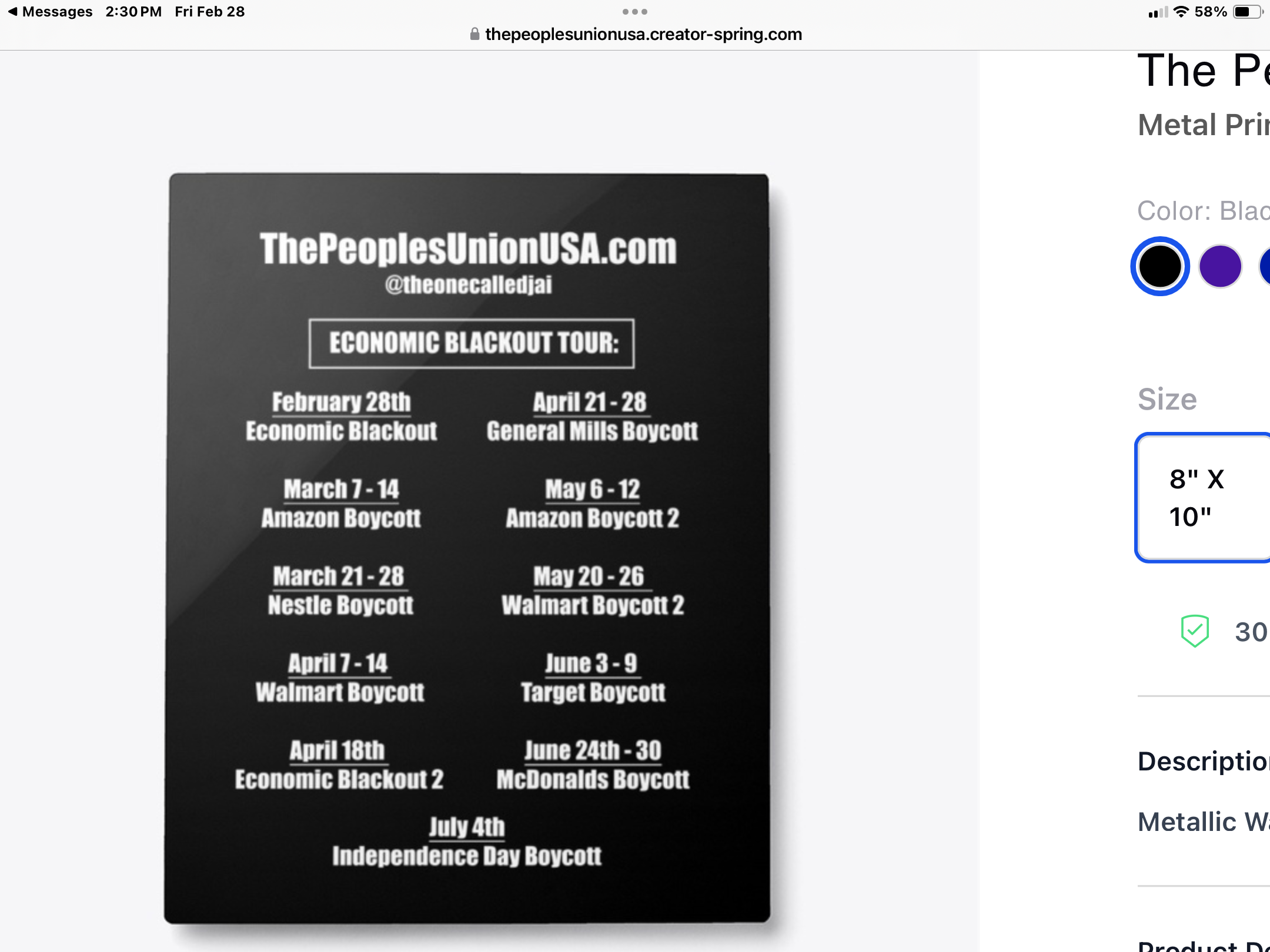
There are events happening that people should know about. Last Friday was the first economic boycott. I don’t know what the outcome of that was. Here is a list of upcoming actions we should know about.

Fighting fascism — Day Twenty-Four — fighting through your pocketbook

Sorry I missed a blog date. I am currently on the road, having decided to visit some friends in West Africa for about a week. It will be interesting to see what they might have to say about what is going on in the US right now. I’ll report back soon.

Today’s blog is about fighting fascism through economic means. One way to express one’s disgust/disagreement/outrage regarding the current political trends is to stop consuming so much, stop consuming certain products, or stop buying from certain suppliers. I suggest three ways that you could express your resistance to the current slide towards fascism in our consumer society.

First, as we know, the administration has called government agencies and the private sector to end Diversity, Equity, and Inclusion initiatives. The cynicism and downright meanness of this move is only surpassed by the willingness of many private companies to (quite quickly) close or weaken their relevant programs and policies. Doing this during Black History Month only adds insult to injury. You can respond by staying away from certain companies and also demonstrate that you appreciate those that have held firm despite pressure from the administration. Below are a list of companies that fit into each category.

Companies that have pared back or ended their Diversity, Equity and Inclusion programs include Google, Amazon, Meta, McDonald’s, Target, Walmart, Ford, John Deere, Craftsman, Harley Davidson, Coors, Lowes, Toyota, Caterpillar, Jack Daniels, Nissan, GM, Intel, Paypal, Chipotle, and Comcast.

Companies that have maintained their Diversity, Equity and Inclusion initiatives include Microsoft, Apple, Costco, Delta Airlines, United Airlines, Southwest Airlines, JP Morgan Chase, Goldman Sachs, Salesforce, Pinterest, NASDAQ, E.L.F. Beauty, Logitech, Visa, Coca Cola, and Wegmans.

I may have some mistakes: please let me know and I will revise. My sources for the above are Forbes, Yahoo News, NPR, Google, and Reddit.

The second action is to go specifically after the elephants in the room: Amazon; Meta; and X (there are others so please share suggestions). Each is associated with billionaires who have taken the craven attitude of aligning themselves with the administration in very vocal and active ways. If it is possible to obtain products from other sources than Amazon, I suggest that you should try very hard. Closing Facebook accounts is a tricky move, but I know people have done so. Many are concerned with the implications of becoming isolated. Personally, I have not yet because I still this idea that we can subvert it to our ends – but I might be rationalizing. WhatsApp may be replaced by Signal and X by Bluesky (I’ve done both). I’m not sure what to do about Google, since I have had the same gmail address for a couple of decades now and it would be hard for me to change email accounts, but I’ll consider it. These are tough choices and what happens when there are monopolies.

The last is to participate in an event that I found out about from Democrats Abroad: An economic “blackout” that is supposed to take place on February 28. The following sections describe this action in some detail (copied from Democrats Abroad). I have to do more research on this idea.

The 24 HOUR ECONOMIC BLACKOUT

“As our first initial act, we turn it off. For one day we show them who really holds the power.

WHEN: Friday February 28th from 12:00 AM to 11:59 PM

WHAT NOT TO DO:

  • Do not make any purchases
  • Do not shop online, or in-store
  • No Amazon, No Walmart, No Best Buy
  • Nowhere!
  • Do not spend money on:
    • Fast Food
    • Gas
    • Major Retailers
    • Do not use Credit or Debit Cards for non essential spending

WHAT YOU CAN DO:

  • Only buy essentials that are absolutely necessary (Food, Medicine, Emergency Supplies)
  • If you must spend, ONLY support small, local businesses.

SPREAD THE MESSAGE

Talk about it, post about it, and document your actions that day!

WHY THIS MATTERS!

  • Corporations and banks only care about their bottom line.
  • If we disrupt the economy for just ONE day, it sends a powerful message.
  • If they don’t listen (they won’t) we make the next blackout longer (We will)

This is our first action. This is how we make history.

The meme for this event is here.

As a final point, last night, Democratics Abroad brought Malcolm Nance to talk to Americans living outside the US. Malcolm is a former military and intelligence officer with tremendous experience all around the world. He is also an analyst, contributor to major media outlets and a writer. He has about a dozen books on the subjects of terrorism, ideology, democracy. He was quite eloquent and believes that there is a national resistance movement that is forming. He had messages in line with what has been proposed in these blog (“Do something for America every day”). One of the more inspiring points he made was that we should adopt a “resistance posture”.  Taking actions such as the ones discussed above are manifestations of that. For those living abroad, he also suggested that we should be the ambassadors of the True America, the one that continues to be dedicated to democracy, the rule of law, freedom of speech and thought, and equality.

There is a national resistance movement that is forming.

Fighting fascism – Day Twenty – keep counting

You may have wondered why I keep numbering my blogs. Today is Day 20 since the inauguration. I was inspired by an article in the Atlantic Monthly that described how Adolf Hitler had dismantled the German democracy in only 53 days after he became chancellor on January 30, 1933. He did this through constitutional means and was able to shut out and oppress opposition in such a way that he could take over all the levers of government in a very short period of time. Sounds familiar? In any case, I plan to continue counting the days until I reach the famous “53”. Will the administration have beat this number? Have we been able to stop them from achieving their aims? We’ll have to evaluate that when we get to that sinister number.

Just as a reminder, these blogs aim to encourage you to take action every day. I know that it must seem difficult at times and the present context can feel very disheartening. However, the idea behind this modest call to action is that we must stay engaged, regardless of wins and losses. Many, if not most, citizens are appalled by what is going on. By acting, we are transformed from being a group to being part of a network, and eventually part of a movement.

Right now a lot is happening in the courts, which I find inspiring. We don’t seem to be able to count on Congress to do much to slow down or stop the administration (although we need to continue to pester them many times a day to do so). A friend shared with me this very interesting list of all the legal challenges against the administration from Just Security. They count 41 separate cases.

I understand from an article in the New York Times that phone banks at Congress are overwhelmed. It is difficult to get numbers but the article claim that some senators are getting 1,600 calls a minute. Don’t know how many are for or against, of course, but supposedly a healthy proportion is in protest to what is happening. So, do keep calling or writing or go visit their office!

Indivisible comes up again and again as a premier organization mobilizing protests and actions. A friend shared the following which is a summary of one of their virtual meetings and a list of useful resources. Please take a look at the points I highlighted in green, in particular. Everything on this resource list is useful, though.

And I’m sorry if I am not keeping up with all the great ideas you have had or the comments that you have made. I promise to catch up soonest. Here is one that I promised to mention. a piece written by JVL about what the Democrats need to do now – How to Win the USAID Fight.  And it isn’t to follow Chuck Schumer.  Some very good stuff here.


All the best,

Michel

[FROM INDIVISIBLE]

There was so much AMAZING energy on this week’s Q&A chat with Leah and Ezra! We are glad you were here if you were one of the 3,000 who joined us. If you missed it, don’t worry, we are including everything you need to know to get caught up on the call where we laid out “The Plan” for moving forward.  

Indivisible group member, Chris J., shared a wonderful quote: “The antidote to anxiety is ACTION”  We will not succumb to anxiety and are ready to take action.    We are trying to learn from you, the leaders of this movement. One specific topic that has come up is people wanting a list of alternative news sources other than mainstream media.  Please take a moment to respond to this quick survey and we will compile and share a list of where you’re getting your news. 

Resources from yesterday’s call:  

Find a recording of yesterday’s discussion here “What’s the Plan” 

If you prefer to read the transcript, you can find it here.  

Join us on February 13th for the next What’s the Plan? Q&A with Leah and Ezra: Register here

Have you seen the new Indivisible guide yet? Here’s our guide to resisting Trump 2.0

If you live in a blue state, check out our Indivisible Blue State Guide  Start or get connected with your local Indivisible Group  

Trump’s nominees aren’t just bad picks – they’ are a threat to democracy. Fight back! Nix Trump’s Most Dangerous Nominees

Don’t miss a thing! Bookmark this page to keep track of all weekly actions: 

Hold your elected officials accountable! Show up at their offices and demand to be heard.  Start here with our Meeting with Office Holders Toolkit 

Check out our resource on how to stay prepared and secured during a second Trump administration.  

Follow us on Bluesky 

Find your local Indivisible group: https://indivisible.org/groups 

Join our mailing list 

If you want to organize locally against ICE raids on schools, see this google doc with a toolkit on how to push your own school boards to fight back.   

Fighting fascism — Day Sixteen – the importance of international aid

The brutal manner in which the administration is shutting down USAID is telling of the kind of strategies they will implement going forward. They are relying on a non-governmental entity to do their bidding; they are destroying an institution that is a key part of our government so that they can ensure total loyalty and control; they are acting in extra-legal manner to see if they can get away with it.

Full disclosure. I am a big fan of USAID. They have made a tremendous contribution to improving the lives of people all over the world, particularly of those who were most vulnerable. It has established and maintained a strong network of dedicated professionals who have acquired unequaled experience and commitment in the area of international development, and have conducted essential research on how to make things in developing countries work better – all of which now may be lost. US foreign aid is not only essential for improving the world for others, it represents a reflection of what is good about the US – generosity, compassion, and helpfulness. Here’s a website that has surprisingly not been taken down that provides some notions of what is good about USAID.

Now, another full disclosure. Presently retired, I worked in the field of international development all my professional life. I specifically focussed on helping education systems in development countries – in Africa, the Middle East, and Asia. I worked for more than twenty years for the World Bank, which is an international organization and before that, as an independent consultant and as a member of a independent non-profit organization, where I worked on many projects and initiatives that were financed by USAID, always in the education sector. As a result of our work, millions more children go to school (that’s right, millions), hundreds of thousands of teachers teach better, millions of textbooks and other teaching aids ended up in children’s hands, universities have been established, vocational and technical training oppportunities have been created to ready youth for the world of work, and millions more have become literate.

Of course, development assistance could be done more effectively, efficiently, with greater success, with a more sustainable impact, etc.  – but who can say otherwise about any field? However, I would never say that such aid should end or that the institutions that have supported it should be dismantled. Many vulnerable people living in many developing countries will be terribly impacted by this freeze. What would be destroyed outweighs by far what would be created. And what exactly would be created? That is the 40 billion dollar question.

What can be done to stop this? What anti-fascist action should be taken in this regard? This is tricky because USAID is not an issue-bound concern and not often a top priority for many. There was a rally in Washington yesterday in support of USAID where senators and Representatives of the House, as well as others came out strongly against the administration’s war on this agency. You may want to call your senator or Representative to voice your own concern. But there must be more we can do.

I am not very happy with the Democratic National Committee in general these days and on this issue in particular. I feel that they should react more fiercely to what the administration is doing, particularly with regards to the dismantling of government institutions, such as USAID. When I go to their site, it seems to only be focused on fund raising and elections rather than organizing resistance now. I guess I’m in a grumbling mood today.

In any case, along other lines, here are a couple of places where you might be able to undertaken your “daily anti-fascist act”.  I’m sorry they are not something specific on USAID.

One is Indivisible, which has organized a number of actions in Senator offices around the countries to demand a stop to the dismantling of government. They have virtual events as well. I’m planning to attend one to see what it’s all about.

There is also an organization called Earth Justice: “(which) is the premier nonprofit public interest environmental law organization. (It) wield(s) the power of law and the strength of partnership to protect people’s health, to preserve magnificent places and wildlife, to advance clean energy, and to combat climate change.” They have a great slogan: “We are here because the earth needs a good lawyer.” Politicsgirl speaks highly of this organization.

Fighting fascism – Day Fourteen – fighting the takeover of our government

For those of us who have worked or currently work for government, international organizations, or NGOs that receive government funding, you have probably heard from friends and colleagues or are personally experiencing what is going on now and know how scary it is. It is destructive — both in terms of the lives of people currently working for the government and government-financed institutions (who may lose their jobs or be forced to radically change the way they conduct their jobs), as well as what it means for the American people. The administration is attempting to transform government into a party machine, and in such cases, loyalty is much more important than competence or patriotism. The witch hunt is on. The administration is essentially trying to put in place mechanisms of control and centralization that can ensure a “smoother” implementation of its agenda – an agenda, as you well know by now, that I depict as establishing fascism in America.

Someone who works in the Office of Personnel Management (OPM) shared the following: “… there’s a hostile takeover of the federal civil service…. The [OPM is the] very backbone of American Government, the HR of all HR in the U.S. Government has been taken over by outside politicals. In just five days, they managed to push aside dozens of non-political, career civil servants who were there specifically to prevent the civil service from becoming the President’s henchmen…. they’ve sent numerous requests to all the agencies to collect information on gov’t employees that they see as a threat to their agenda. Instructions say to send these lists to (A.S.). But (she) is not actually an OPM employee, she works for Elon Musk… The non-political civil servants here at OPM are watching helplessly as our government is being systematically dismantled bit by bit. Even the IGs are being fired to prevent them from investigating the numerous whistleblower complaints we’ve filed.”

How do we communicate our furor over this? And confront it? It is a bit trickier than protesting specific executive orders regarding tariffs, immigration, LGBTQ+, or other issues and may be harder to get people to organize around. However, I think that it is important that we voice our concern about this as well as the more front line issues that are under attack.

There is a link at 5calls.org that addresses this. Also, they have the following template for voicing concerns that anyone could use to call their congressperson or senator. As discussed in yesterday’s blog, phone calls may be the best way to express our concern to our representatives in government.

  • Hi, my name is [NAME] and I’m a constituent from [CITY, ZIP].
  • I’m calling to express my outrage over Elon Musk’s unlawful and undemocratic takeover of the federal government, and I ask that [REP/SEN NAME]…
  • [Choose 1-3 reasons:]
  • — Forcefully speak out against an unelected billionaire having undue influence on and control over our government’s data, personnel, and payment systems;
  • — Refuse to cooperate with Musk’s private enterprise masking as a government agency;
  • — Support any legal challenges or investigations into Musk and his organization’s activity;
  • — Halt all work in Congress until the unconstitutional power grabs stop.
  • Thank you for your time and consideration.

A friend shared this website, Civil Service Strong, that provides advice to American civil servants who are under a lot of unnecessary pressure these days.

Also, here is a list of phone numbers of senators, sent to me by a friend.

Fighting fascism – Day Twelve – call your representatives!!

Fighting fascism – Day Twelve

A good friend has indicated that we need to really focus on communicating with our legislators. This friend has some very good advice about how to do this. I’m going to be a little bit lazy here and just cut and paste what she provided to me. I think that what she proposes demands more of our time than what I have suggested, but she makes some pretty good arguments about why we should pursue this strategy:

PICK UP THE PHONE!!!! PICK UP THE PHONE!!! There are two things that all sane Americans should be doing all the time right now, and they’re by far the most important things. [If you want to share this, please copy and paste so it goes beyond our mutual friends.] –>

You should NOT be bothering with online petitions or emailing (not sure I agree, but let’s follow this idea through).

1. The best thing you can do to be heard and get your congressperson to pay attention is to have face-to-face time – if they have townhalls, go to them. Go to their local offices. If you’re in DC, try to find a way to go to an event of theirs. Go to the “mobile offices” that their staff hold periodically (all these times are located on each congressperson’s website). When you go, ask questions. A lot of them. And push for answers. The louder and more vocal and present you can be at those the better.

2. But, those in-person events don’t happen every day. So, the absolute most important thing that people should be doing every day is calling. You should make 6 calls a day (I am less demanding, I admit): 2 each (DC office and your local office) to your 2 Senators & your 1 Representative. The staffer was very clear that any sort of online contact basically gets immediately ignored, and letters pretty much get thrown in the trash (unless you have a particularly strong emotional story – but even then it’s not worth the time it took you to craft that letter).

Calls are what all the congresspeople pay attention to. Every single day, the Senior Staff and the Senator get a report of the 3 most-called-about topics for that day at each of their offices (in DC and local offices), and exactly how many people said what about each of those topics. They’re also sorted by zip code and area code. She said that Republican callers generally outnumber Democrat callers 4-1, and when it’s a particular issue that single-issue-voters pay attention to (like gun control, or planned parenthood funding, etc…), it’s often closer to 11-1, and that’s recently pushed Republican congressmen on the fence to vote with the Republicans. In the last 8 years, Republicans have called, and Democrats haven’t.

So, when you call:

A) When calling the DC office, ask for the Staff member in charge of whatever you’re calling about (“Hi, I’d like to speak with the staffer in charge of Healthcare, please”) – local offices won’t always have specific ones, but they might. If you get transferred to that person, awesome. If you don’t, that’s ok – ask for their name, and then just keep talking to whoever answered the phone. Don’t leave a message (unless the office doesn’t pick up at all – then you can…but it’s better to talk to the staffer who first answered than leave a message for the specific staffer in charge of your topic).

B) Give them your zip code. They won’t always ask for it, but make sure you give it to them, so they can mark it down. Extra points if you live in a zip code that traditionally votes for them, since they’ll want to make sure they get/keep your vote.

C) If you can make it personal, make it personal. “I voted for you in the last election and I’m worried/happy/whatever” or “I’m a teacher, and I am appalled by Betsy DeVos,” or “as a single mother” or “as a white, middle class woman,” or whatever.

D) Pick 1-2 specific things per day to focus on. Don’t go down a whole list – they’re figuring out what 1-2 topics to mark you down for on their lists. So, focus on 1-2 per day. Ideally something that will be voted on/taken up in the next few days, but it doesn’t really matter – even if there’s not a vote coming up in the next week, call anyway. It’s important that they just keep getting calls.

E) Be clear on what you want – “I’m disappointed that the Senator…” or “I want to thank the Senator for their vote on…” or “I want the Senator to know that voting in _____ way is the wrong decision for our state because…” Don’t leave any ambiguity.

F) They may get to know your voice/get sick of you – it doesn’t matter. The people answering the phones generally turn over every 6 weeks anyway, so even if they’re really sick of you, they’ll be gone in 6 weeks. From experience since the election: If you hate being on the phone & feel awkward (which is a lot of people) don’t worry about it – there are a bunch of scripts (Indivisible has some (I had shared 5calls.org in previous posts), there are lots of others floating around these day). After a few days of calling, it starts to feel a lot more natural. Put the 6 numbers in your phone (all under P – Politician. An example is McCaskill MO, Politician McCaskill DC, Politician Blunt MO, etc…) which makes it really easy to click down the list each day.

Fighting Fascism — Day Nine – staying in the mood

Fighting fascism – Day Nine

Considering that the “flood the zone” strategy is under implementation, it is easy to lose focus and feel overwhelmed. This is when a list of guidelines or attitudes to adopt might be useful. Although they aren’t completely in line with what I have been promoting (take action), they provide good analysis and advice.

A good friend forwarded this very interesting list of things to keep in mind, cut from an article by Mark Elias entitled 10 Ways to Protect Democracy.

“1. Stay engaged: When all the news is about Trump and pardons and lies, it is easy to want to retreat and stop paying attention. Don’t. It is precisely when things are hard that we must all lean into remaining vigilant and informed.

2. Help Democrats: The success of any opposition movement rests on the opposing party taking power. This is not a minor detail; in our system of government, it is the essential goal. Next time you want to attack a Democrat for being too much of this or too little of that, realize that you are only helping the GOP. Instead, find a Democrat you support and volunteer or contribute to their campaign.

3. Don’t do (the administration’s) work: This is more than simply resisting (the administration’s) actions; it is refusing to accept his false assumptions. When he says he wants to abolish birthright citizenship, do not accept the premise that he has the power to do so. Stay grounded in the truth: The U.S. Constitution is clear, Trump is powerless and the courts will reject his efforts. (Not too sure about this: I think we will have to fight this on many levels).

4. Don’t grade on a curve: This goes both ways. Do not hold Republicans to a lower standard and do not hold Democrats to a higher one. When a Republican does something normal, recognize it is normal not exceptional. When a Democrat does something normal, recognize it is normal and not terrible.

5. Believe in the courts: Republicans control all three elected branches of the federal government. They do not control the courts. Yes, the U.S. Supreme Court has a solidly conservative majority, but the high court only hears a few dozen cases a year. And in some of those, the Court has sided with democracy. Most importantly, remember that Joe Biden confirmed a record number of new federal judges. And, of course, there are state courts. For better or worse, we are dependent on the courts to help protect democracy. Rather than assume they will not, insist they do.

6. Beware of false attacks: Pam Bondi is an election denier. Kash Patel has an enemies list of political opponents. (The administration) has promised retribution. When you hear that () foe (of the adminisrtration) is under investigation, be skeptical. When you read about anonymous leaks against pro-democracy leaders, consider that it may be part of an effort to discredit their work.

7. Support independent media: The legacy media is failing our democracy. Every day brings more news of another billionaire owner or corporate overlord bowing down to (the administration). The solution is found in independent news outlets that have no incentive to make nice with the Republican Party. Some of these are broad-based news operations, some are issue specific. Pick a few and subscribe for free. Find one or two that you pay to support. It will go a long way to ensure a vibrant media ecosystem willing to stand up for democracy.

8. Use your town square: Every one of us has a town square. It may include our social media accounts, our local book club or dinner table. Use your town square to speak out in favor of democracy and against what Republicans are doing. Do not shy away from difficult conversations; seek them out. Engage the curious. Educate those who seek information. We all have a role to play, so don’t assume your voice is too faint or your platform too small.

9. Prepare for a long fight: In 2017, we hoped that Trumpism was a fluke and would pass. We now know it will not. We are in for a long fight and must build and commit to an opposition movement that will stand the test of time. We will have victories and setbacks, good days and bad. We must understand that this will not be over in one election or with the defeat of any one candidate. This is the fight of our generation, and it will take time.

10. Don’t give up hope: Our best political movements were hopeful. John Kennedy insisted that “we should not let our fears hold us back from pursuing our hopes.” Bill Clinton was the man from Hope. Barack Obama ran a campaign based on hope and change. Donald Trump and the Republicans want you to give up hope. Despair and cynicism fuel their movement. We must always, in the words of Jesse Jackson, “keep hope alive.””

_____________________

The same friend shared the following article that I found very inspiring: Advice for heading into Week Two

_____________________

The daughter of MLK and Coretta Scott King also has a ten-item list of advice for these times.

  1. Don’t use his name, EVER (I always refer to the “administration”)
  2. Remember this is a regime and that he is not acting alone
  3. Don’t argue with with those who support him – it doesn’t work (I don’t agree)
  4. Focus on his POLICIES not his orange-ness and his mental state
  5. Keep your message positive; they want the country to be angry and fearful because this is the soil from which their darkest policies will grow
  6. No more helpless/hopeless talk
  7. Support artists and the arts
  8. Be careful not to spread fake news. Check it’
  9. Take care of yourselves; And
  10. Resist!

Nice announcement on Common Cause to put us in a better mood: Trump Reverses Aid Cuts After Outcry: President Trump reverses aid cuts after public outcry, marking a major win for Americans defending critical programs like Medicaid and food assistance.

New 5calls.org items to check out (I like this site, but they are not always quick enough).

Might want to make a trip to COSTCO, since they decided to keep their DEI program. Might want to skip Target, though, which didn’t…

Fighting fascism — Day Four – sharing ideas

Phew! They are certainly compounding assault upon assault on democracy. Overturning many of the good works of the previous administration on climate, health care, and the rule of law. The more I read, the more swamped I feel. Some claim that the administration will eventually shoot itself in the foot. I’m concerned that statements like that render us passive and that a lot of damage can be done in the meantime. What do you think?

I got many ideas from you and I want to share a couple in today’s blog. There is no overarching theme. Just sharing. Send me more ideas!!

The first is an initiative called “Women in Black”, in which a friend in Baltimore participates.  Here are a couple of quotes from their website that explain it better than I could.

Women in Black is a world-wide network of women committed to peace with justice and actively opposed to injustice, war, militarism and other forms of violence. … We are not an organisation, but a means of communicating and a formula for action… Any group of women anywhere in the world at any time may organize a Women in Black vigil against any manifestation of violence, militarism or war… Our actions often take the form of women wearing black, standing in a public place in silent, non-violent vigils at regular times and intervals, carrying placards and handing out leaflets…. A vigil, as Women in Black use the term, generally means a nonviolent demonstration of one or more people in which we hold signs in a public location to express our political views. It’s not a march, but Women in Black around the world have sometimes also held marches. A vigil can be one woman (yes!) or a small group or even a large group.

I urge you to look at their site and see if they organize events in your city. If not, you might consider holding an event of your own. They are set up to provide guidance.

Another friend reminded me that if you are an American citizen who lives outside the US, you should consider becoming a member of Democratic Abroad. They focus a lot on getting out the vote, informing Americans living abroad how to vote (not always a straightforward process). They also urge members to write to reps on specific issues. I belong to the Marseille/Aix-en-Provence chapter and have enjoyed it.

It seems that one of my links for the ACLU (Stop Project 2025) didn’t work for some reason. Here it is again, hopefully working this time. Considering yesterday’s blog, I also want to draw your attention to a couple of other of ACLU’s initiatives that are timely: one on birthright citizenship and the other is on preventing mass deportations. I should have waited until next Thursday, but I just couldn’t!